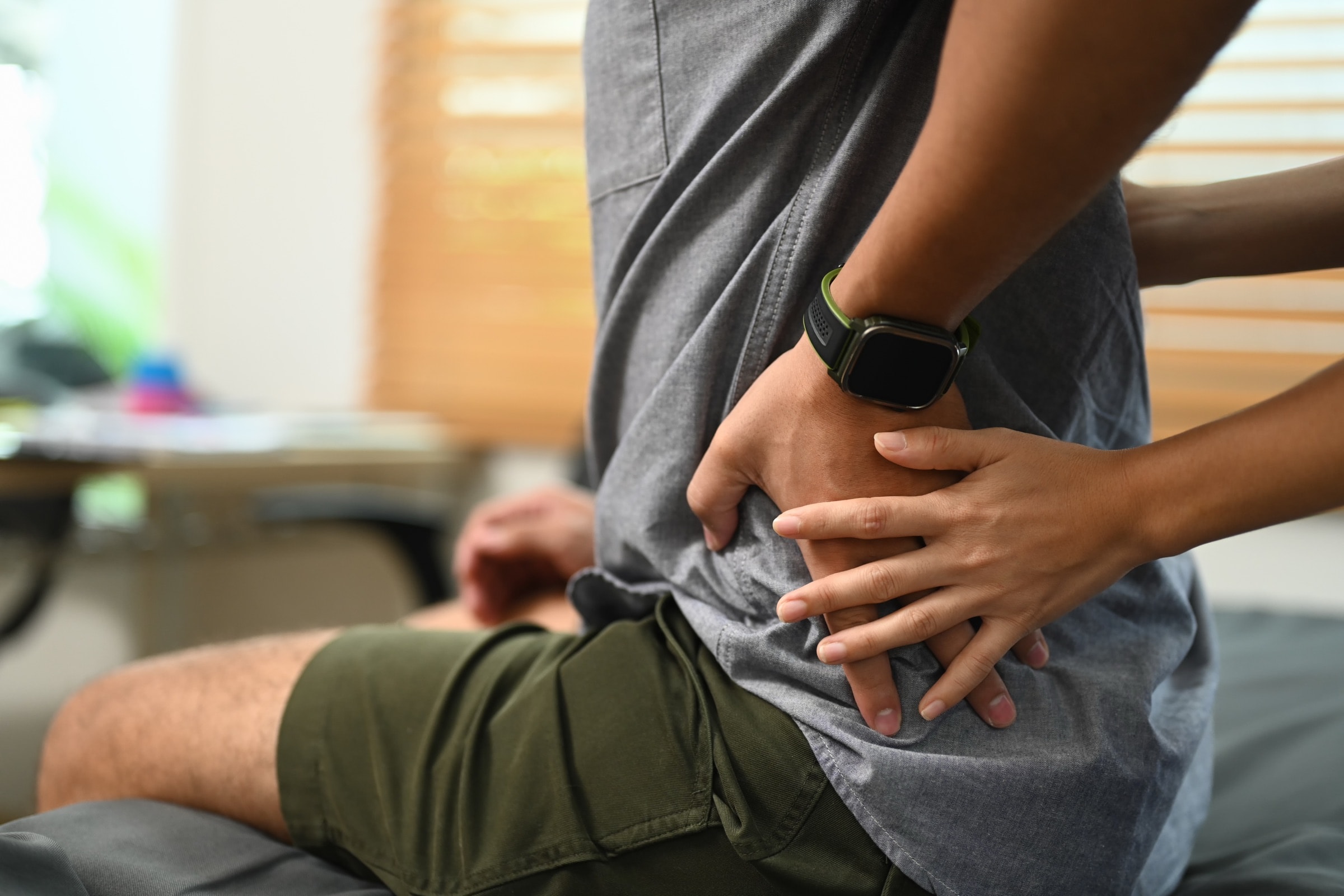
Hip Arthritis or Muscle Pain? How to Tell the Difference
Hip arthritis most often hurts in the groin or the front of the thigh, and it tends to feel stiff after you rest. Muscle pain more often sits deep in the buttock or along the side of the hip and thigh, and pressing the right spot brings it on. Many people have both, and an X-ray alone cannot tell you which one is causing most of your pain.
Learn moreHow Dr. Gordon treats hip arthritisTwo sources, one sore hip
Osteoarthritis is wear and change in the cartilage and bone of a joint. Around the hip joint are layers of muscle, and some of the most important, such as the piriformis and the obturator internus, sit deep under the gluteal muscles. Trigger points in these muscles cause a deep, diffuse ache that is easy to confuse with joint pain. The gluteus minimus can also send deep pain down the side of the leg.
Clues that point to the joint
- Pain in the groin, the most common spot, or the thigh, sometimes spreading to the buttock or knee.
- Stiffness that is worse in the morning or after sitting, and eases once you get moving.
- Trouble bending, squatting or putting on shoes, and pain getting up from a chair or out of a car.
- Less range of motion, sometimes with a limp.
Clues that point to muscle
- A deep ache in the buttock or side of the hip that is hard to point to with one finger.
- Aching that builds the longer you sit, or when you bring one leg across the other.
- Aching down the side or back of the thigh.
- Tender spots that bring on your familiar pain when pressed.
Pain at the bony point on the outside of the hip, spreading down the outer thigh and worse at night lying on that side, is often not the joint at all. The American Academy of Orthopaedic Surgeons describes this pattern with trochanteric bursitis, an irritated bursa over that bony point.
Why the X-ray does not settle it
The X-ray and the pain often disagree. A 2015 study in the BMJ compared hip X-rays with hip pain in two large groups of adults. Among hips that were frequently painful, only 9 to 16 percent showed arthritis on X-ray. Among hips with arthritis on X-ray, only about 1 in 5 were frequently painful.
A hip can look worn and feel fine, and a normal X-ray does not rule arthritis out. The authors advised clinicians to keep evaluating and treating hip pain that suggests arthritis. This is why the hands-on exam matters so much.
Why many people have both
The two feed each other. Muscles around an arthritic hip tighten to guard it and can refer pain into the joint, and weak muscles pass more load to it. So even a hip with real arthritis often has a muscle side that can be treated.
How the exam sorts it out
The first visit runs 60 to 75 minutes. I review your X-rays and orthopedic notes, watch you walk, climb stairs and stand up from a chair, and use hip tests that help separate joint pain from muscle pain. Then I examine the deep rotators, the obturator internus and the gluteal muscles by hand.
Your orthopedist or primary care doctor should evaluate the joint itself, and they manage medication, injections and any decision about joint replacement. I am glad to work alongside them and your physical therapist.
See a doctor first if you have a hot, red, swollen joint or fever; hip or groin pain with inability to bear weight; pain after a fall, especially if you are older or have osteoporosis; visible deformity after a fall or injury; groin pain with nausea, vomiting or a painful bulge; severe pain at night that does not change with position; calf pain and swelling, which can signal a blood clot; or numbness, coldness or color change in the foot. If you have any of these, contact your doctor or go to the nearest emergency department.
Where treatment fits
Staying active and strengthening the muscles around the hip are the core of arthritis care, and the American College of Rheumatology and Arthritis Foundation guideline strongly recommends exercise. Dry needling releases trigger points in the muscles around the hip that add pain and stiffness. Alongside dry needling, I use neuro-functional acupuncture, built on neuroscience and evidence-based practice. Unlike regular electroacupuncture, the needles and gentle electrical stimulation are mapped to the specific nerves involved, such as the nerves around the hip. It works in three ways. It neurorehabilitates, helping irritated tissues and nerve receptors recover. It neuromodulates, shifting the body's own pain-relieving chemistry. It neuroregulates, calming the nerve signals and circuits that keep arthritis pain going. The deep hip pain page explains the deep muscle side in more detail. Results vary from person to person.
If you are not sure what is causing your pain, try the My Symptoms tool.
Questions people ask
Why does my hip arthritis hurt in my knee?
Pain from the hip joint can spread down the thigh to the knee, so a sore knee is not always a knee problem. The exam checks both.
Is pain on the outside of my hip a sign of arthritis?
Not usually. Hip arthritis most often hurts in the groin. Pain at the bony point on the outside of the hip that is worse when you lie on that side often comes from the bursa there, or from trigger points in muscles such as the gluteus minimus.
My X-ray was normal. Can it still be arthritis?
It can. X-rays miss some arthritis, so your doctor weighs your symptoms and exam too. It is also a good reason to check the muscles carefully.
References
- Kim C, et al. Association of hip pain with radiographic evidence of hip osteoarthritis: diagnostic test study. BMJ. 2015;351:h5983.
- American Academy of Orthopaedic Surgeons. Osteoarthritis of the hip. OrthoInfo. https://www.orthoinfo.org/diseases--conditions/osteoarthritis-of-the-hip
- American Academy of Orthopaedic Surgeons. Hip bursitis. OrthoInfo. https://www.orthoinfo.org/diseases--conditions/hip-bursitis
- Barry HC. ACR guideline for managing patients with degenerative joint disease of the hand, knee, and hip. Am Fam Physician. 2020;102(6):376-377.