
Pain Symptom
Head Pain
By Dr. Anthony J. Gordon, Doctor of Acupuncture | Last reviewed September 2026
The pain may sit at the base of your skull, wrap around your temples, burn along your scalp, or ache in your face and jaw. It does not feel like a typical headache, and it may shift from day to day. Many forms of head and face pain come from the muscles of the neck and jaw and the nerves that run through them.
Prefer to talk it through? Call (516) 597-5400. Most new patients are seen within one to two weeks.
Overview
Understanding Head and Face Pain
Head pain covers more than headaches. It includes pain at the back of the head, called occipital pain, pain in the temples, face and jaw, and burning or tender spots on the scalp. Your physician should evaluate new, severe or unusual head pain, especially with neurological symptoms.
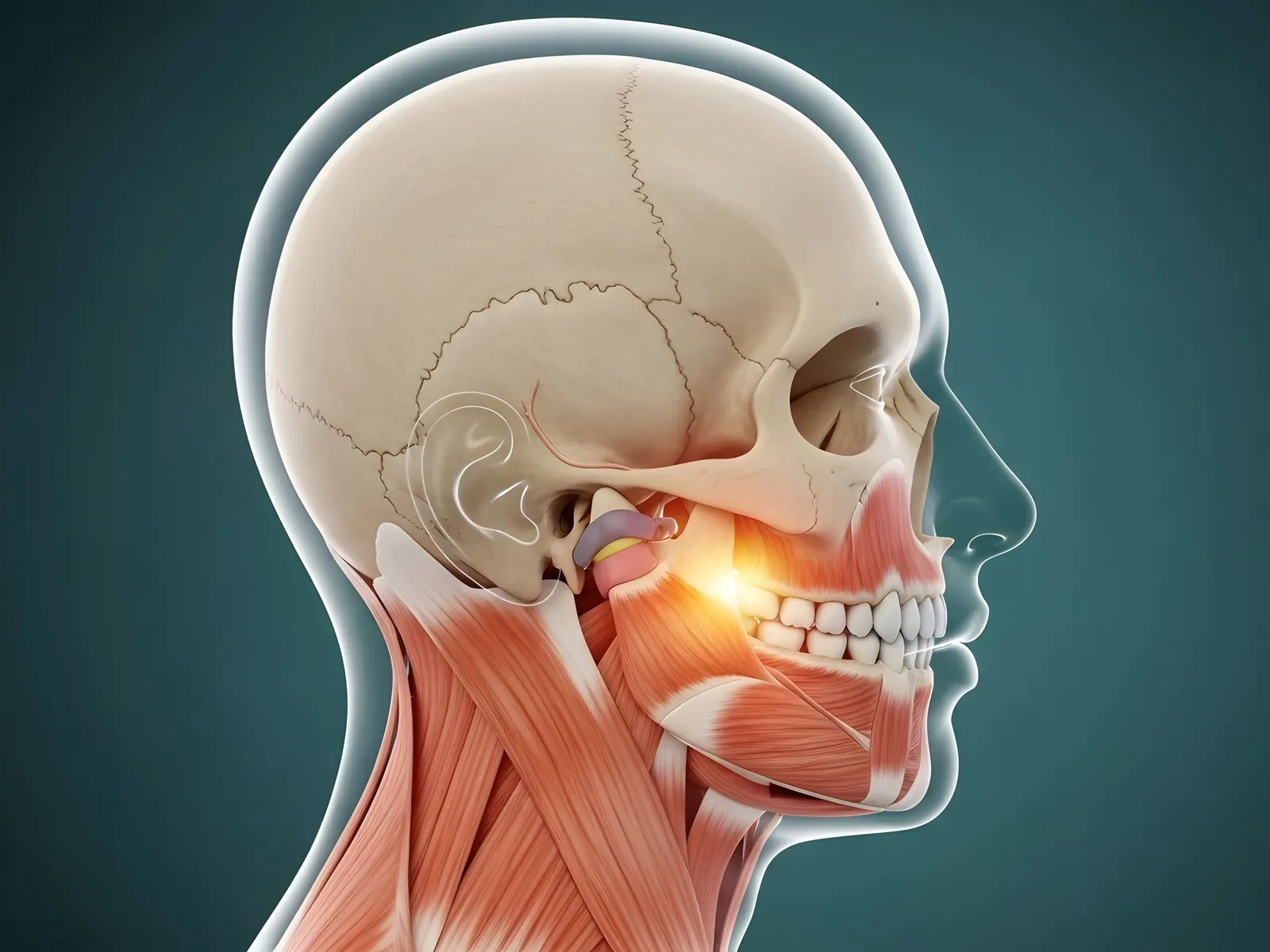
Many types of head pain are referred from muscles and nerves. Trigger points in the suboccipital, upper trapezius and sternocleidomastoid muscles refer pain to the head, eyes and face. The greater and lesser occipital nerves pass through neck muscles and can cause shooting or burning pain over the scalp, called occipital neuralgia. Jaw muscles such as the masseter and temporalis refer pain to the temples, teeth and ears.
Dr. Gordon maps where your head pain comes from and treats the neck, jaw and scalp nerve contributors.
Head and Face Pain at a Glance
Also called
Facial pain, scalp pain, occipital pain
Back of head pain
Often suboccipital trigger points or occipital nerve irritation
Temple and jaw pain
Often temporalis and masseter trigger points
Face and eye pain
Often sternocleidomastoid and upper trapezius referral
Scalp burning or tenderness
Often occipital nerve irritation
The Gap in Care
What Tests Check, and What They Can Miss
Head and face pain is often treated with medication alone. Muscle and nerve sources in the neck and jaw are frequently overlooked.
What routine testing is looking for
- Neurological disease
- Sinus or dental problems
- Eye conditions
- Vascular causes
What often keeps symptoms going
- Suboccipital and upper trapezius trigger points
- Occipital nerve irritation
- Jaw muscle trigger points
- Sternocleidomastoid referral to the face
- Clenching, posture and stress
These are found with hands-on assessment of the neck, jaw and scalp.
Signs & Symptoms
Does This Sound Like You?
Symptoms vary from person to person. These are the patterns Dr. Gordon sees most often.
Pain at the base of the skull
Aching or pressure at the back of the head.
Shooting scalp pain
Electric or shooting pain over the scalp.
Temple pain
Aching at the temples.
Face or eye pain
Pain behind the eye or in the face.
Jaw and ear pain
Pain in the jaw or around the ear.
Tender scalp
Tenderness brushing hair or wearing a hat.
Root Causes
The Four Drivers Dr. Gordon Looks For
Most people have more than one of these in play. Finding which one leads makes treatment more efficient.
Neck trigger points
Suboccipital and upper trapezius trigger points refer to the head.
Occipital nerve irritation
The occipital nerves pass through neck muscles and can be compressed.
Jaw muscle tension
Masseter and temporalis trigger points refer to the temples, teeth and ears.
Clenching and stress
Clenching and stress keep these muscles tense.
Your First Visit
How Dr. Gordon Evaluates Head and Face Pain
The initial evaluation runs 60 to 75 minutes. You leave with a clear picture of what is driving your symptoms, a written plan, a realistic timeline, and in most cases your first treatment.
Records and history review
Dr. Gordon reviews your medical evaluation, including any neurology, dental or imaging findings, and your pain pattern.
Neck assessment
Assessment of the suboccipital, trapezius and sternocleidomastoid muscles.
Occipital nerve testing
Dr. Gordon checks the occipital nerves for irritation.
Jaw assessment
Assessment of the masseter, temporalis and jaw movement.
Plan and coordination
A clear plan, plus communication with your physician, orthopedist or physical therapist when that helps your care.
When to see a physician first
- A sudden, severe headache, the worst of your life
- Headache with fever and a stiff neck
- Headache after a head injury
- New weakness, numbness, confusion, vision loss or trouble speaking
- A new headache pattern after age 50
- Headache that wakes you or steadily worsens over days or weeks
If you have any of these, contact your doctor or go to the nearest emergency department.
Bring to your first visit
Records
Recent lab results, imaging reports and specialist notes. These can also be faxed ahead.
Treatment history
A short list of what you have tried and what did or did not help.
Clothing
Something comfortable and loose fitting.
Treatment
How Dr. Gordon Treats It
These are the tools Dr. Gordon uses most often for head and face pain, chosen from your exam findings.
Primary approach
Orthopedic Dry Needling
Dr. Gordon has used dry needling for more than 18 years. Treatment releases trigger points in the neck and jaw muscles that refer pain to the head and face.
See all servicesNerve focus
Neuro-Functional Acupuncture
Electro-acupuncture along the occipital and cervical nerve pathways to calm nerve pain.
See all servicesBetween visits
Head Pain Plan & Team Coordination
Posture, clenching and trigger guidance, coordinated with your physician, neurologist or dentist.
Referring provider? Contact the clinicWhat to Expect
A Typical Recovery Arc
Visits 1 to 3
Find the main driver
Dr. Gordon confirms which muscles and nerves are behind your symptoms and starts calming the most reactive areas. Many people notice early changes between visits.
Visits 4 to 8
Lower the baseline
Day-to-day symptoms ease, flares become shorter and less frequent, and normal routines start to feel more manageable.
Visits 9 to 12 and beyond
Build resilience
Visits are spaced out as improvement holds. You leave with a maintenance and early-flare plan.
Most patients are seen weekly or every other week during active care. Individual results vary with how long symptoms have been present and how reactive they are. Progress is reassessed at every visit.
Not sure how to describe it? Put your pain or discomfort into words before your visit
"As a full-time stressed out college student, I suffered from migraines and neck pain. After working with Dr. Gordon and his wonderful nurse, I finally can manage my stress, with no migraines!"
Jules Monda, Google Review
Head and Face Pain Questions
Answers About Head and Face Pain
Still unsure whether this is the right fit? Reach out before you book and Dr. Gordon will talk through your history with you.
Irritation of the occipital nerves at the back of the head, causing shooting or burning scalp pain.
Yes. The sternocleidomastoid and trapezius commonly refer pain to the face and eyes.
For new, severe or unusual head pain, especially with neurological symptoms, yes.
Yes, when performed by a trained provider with detailed anatomical knowledge.
Many people improve within four to eight sessions.
Yes. Clenching overloads the jaw muscles that refer pain to the head.
Before You Book
General Questions
The clinic is an out-of-network practice. The initial evaluation is $300 and follow-up visits are $250. After each visit you receive a detailed superbill to submit to your PPO plan for possible reimbursement. FSA and HSA cards are accepted, and the clinic can run a complimentary benefits check before your first appointment. The check is a courtesy, so please confirm your coverage with your plan. See Insurance & Fees for details. See Insurance & Fees for details.
The first evaluation is 60 to 75 minutes and usually includes treatment. Follow-up visits run 45 to 60 minutes.
Yes. Call (516) 597-5400 or send a message through the contact page. This is especially helpful if your case is complex and you want to understand the approach before committing to a full evaluation.
1508 Union Turnpike, Suite 133, North New Hyde Park, NY 11040, with free parking on site. The clinic is an easy drive from Manhasset, Great Neck, Garden City, Lake Success, Floral Park and Mineola. Early morning, evening and weekend hours are available.
Most people feel a quick muscle twitch or a deep ache that lasts a few seconds. That twitch is a normal sign the trigger point is releasing. Mild soreness for 24 to 48 hours afterward, similar to a hard workout, is common. Depth, angle and stimulation are adjusted to your comfort.
Both use the same fine, sterile, single-use needles. Dry needling targets specific trigger points and tight bands in muscle based on your exam. Neuro-functional acupuncture targets nerve pathways, often with gentle electrical stimulation, to calm nerve sensitivity. For head and face pain, Dr. Gordon commonly uses both.
When performed by a trained, licensed provider with detailed knowledge of anatomy, it has a strong safety record. Tell Dr. Gordon if you take blood thinners, have a bleeding disorder, are pregnant or have a weakened immune system so he can plan accordingly.

About Dr. Anthony J. Gordon
Dr. Anthony J. Gordon is a Doctor of Acupuncture licensed in New York and board certified. He holds ASE certification in intrapelvic and extrapelvic dry needling, along with advanced certifications in Functional Dry Needling and Neuro-Functional Acupuncture. With more than 18 years of clinical experience and over 3,000 complex cases treated, he focuses on pelvic, spinal and orthopedic conditions that have not responded to standard care, and works closely with each patient's physicians and physical therapists.
Read Dr. Gordon's full bioBook an Evaluation for Head Pain
Book a full evaluation with Dr. Gordon and map where your head and face pain comes from.
Early morning, evening and weekend appointments available. Free on-site parking.
Further Reading
Neck Pain and Pain Behind the Eye: How They Connect
From the blog: A stiff neck and an ache behind one eye are often linked. How upper neck nerves can send pain to the eye, which muscles take part, and when to see a doctor.
What Is a Silent Migraine? Migraine Without the Headache
From the blog: A silent migraine is a migraine aura with no headache after it. What it looks like, how it differs from a stroke warning, and what research says on prevention.
Keep Reading