Adenomyosis: Pain, Pressure and What Helps Alongside Medical Care
Adenomyosis is a condition in which tissue like the lining of the uterus grows into the uterus's muscular wall. It can cause heavy or long periods, cramps that get worse over time, and a feeling of pelvic pressure. Your gynecologist diagnoses and treats it. Alongside that care, the muscles and nerves around the pelvis can guard after years of monthly pain, and that part of the pain can be treated too.
Learn moreHow Dr. Gordon treats adenomyosisWhat adenomyosis is
The uterus has a lining on the inside and a thick wall of muscle around it. In adenomyosis, tissue similar to the lining grows into that muscle wall. The uterus can become thicker and sometimes larger. The cause is not known.
MedlinePlus, from the National Library of Medicine, lists heavy or prolonged periods, painful periods that get worse and pain during intercourse as symptoms. Many women have no symptoms at all. It most often occurs in women ages 35 to 50 who have had at least one pregnancy.
How it differs from endometriosis
The two names sound alike, and they are related, but they are different conditions.
- Where it is. Adenomyosis is inside the wall of the uterus. Endometriosis is tissue like the lining growing outside the uterus, on other organs and surfaces in the pelvis.
- How it is found. A 2019 review names transvaginal ultrasound as the first imaging test for adenomyosis, with MRI as a second step when needed.
- How often they overlap. They often occur together. The same review reports that adenomyosis is found in 20 to 80 percent of women with endometriosis, a wide range across studies.
Because they can overlap, a woman with both may find that treating one does not settle all of her pain.
Medical care comes first
Heavy bleeding and worsening cramps need a gynecologist's workup. Fibroids, endometriosis and other causes can look similar, and some need different treatment. Your gynecologist may suggest hormonal options such as a progesterone IUD, pain relievers, or procedures, and leads your care.
See a doctor first if you have fever or chills with pelvic pain; unusual discharge, sores or lesions; bleeding after menopause, or bleeding heavy enough to soak a pad or tampon every hour; sudden, severe pelvic or abdominal pain; possible pregnancy with new pelvic pain; or new numbness in the saddle area or loss of bladder or bowel control. If you have any of these, contact your doctor or go to the nearest emergency department.
The muscle side of the pain
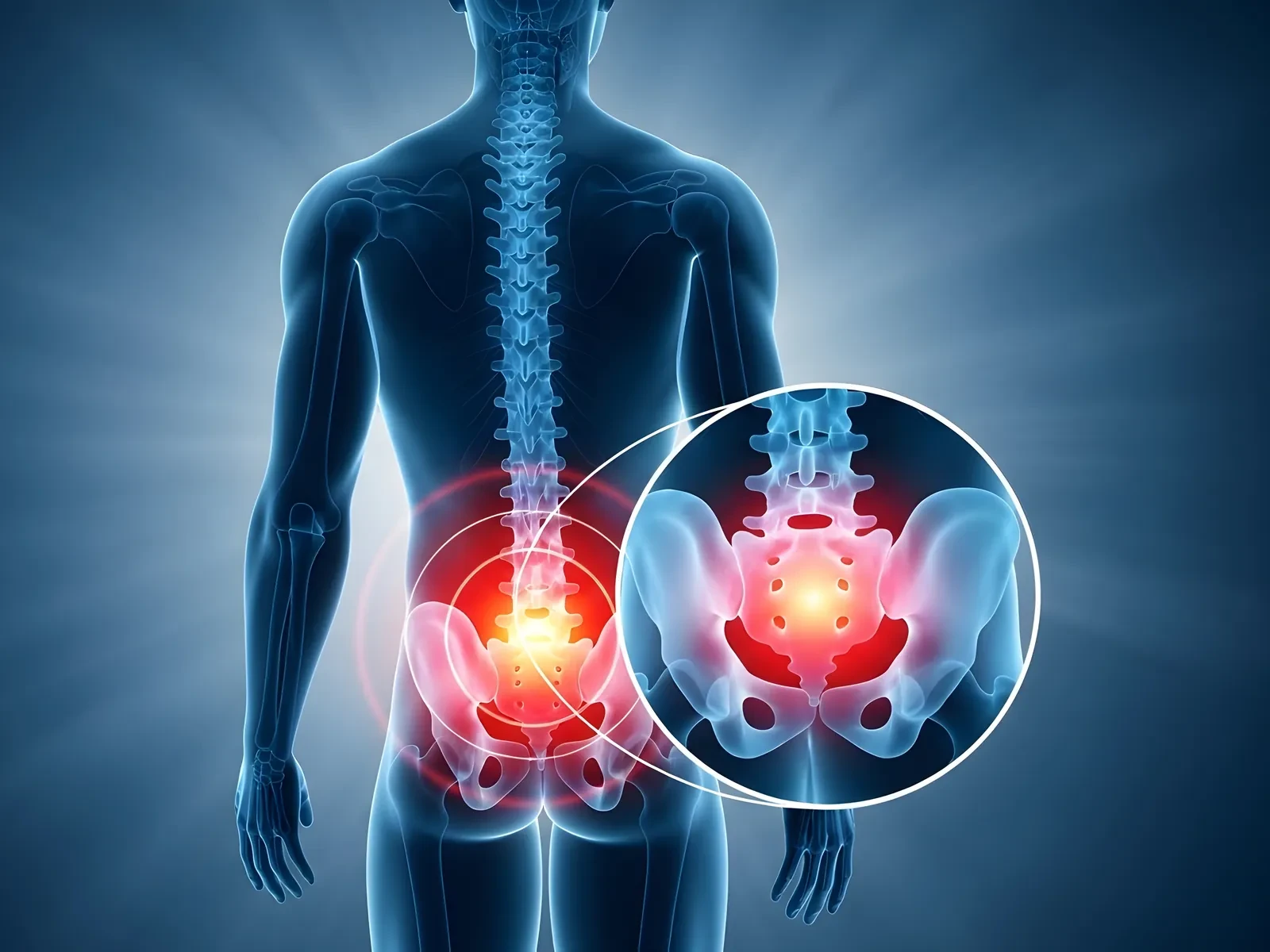
Strong cramping, month after month, teaches the muscles around the pelvis to brace. The pelvic floor can learn to tighten with each period and then stay tight between periods. The uterus also shares nerve supply with the low back and abdominal wall, so uterine pain often shows up as tension and trigger points in those muscles. That is one reason adenomyosis can ache in the low back and thighs.
Over years, the nerves themselves can become more reactive, so pain feels stronger and spreads further than before. The pressure many women describe may come from a larger uterus, from a pelvic floor that never fully lets go, or both.
Studies on this muscle side of adenomyosis specifically are limited. Much of what we know comes from research on painful periods and endometriosis, and from clinical experience.
Clues the muscles are part of your pain:
- You ache between periods, not only during them.
- Your low back, hips or thighs hurt along with your cycle.
- You feel pelvic heaviness, clenching or pain with sitting.
- Pressing on the abdominal or low back muscles brings on a familiar ache.
What I check, and how I treat it
The first visit runs 60 to 75 minutes. I review your gynecologist's findings and imaging, assess the abdomen and low back, and review how your pain follows your cycle. The pelvic floor is examined from the outside, with no internal exam.
This care does not treat the adenomyosis itself. Dry needling targets trigger points in the pelvic floor, abdominal and low back muscles, with the needles going in through the skin of the buttock, perineum or inner thigh, never through the vagina or rectum. Alongside dry needling, I use neuro-functional acupuncture, built on neuroscience and evidence-based practice. Unlike regular electroacupuncture, the needles and gentle electrical stimulation are mapped to the specific nerves involved, such as the sacral and lumbar nerves. It works in three ways. It neurorehabilitates, helping irritated tissues and nerve receptors recover. It neuromodulates, shifting the body's own pain-relieving chemistry. It neuroregulates, calming the nerve signals and circuits that keep cramping pain going. The pain with periods page covers more, including how visits are timed around your cycle. Results vary from person to person.
If you are not sure what is causing your pain, try the My Symptoms tool.
Questions people ask
How is adenomyosis diagnosed?
Usually with imaging. Transvaginal ultrasound is the first test, and MRI can help when the ultrasound is not clear. Your gynecologist puts the imaging together with your symptoms and rules out other causes.
Can you have adenomyosis without symptoms?
Yes. Many women with adenomyosis have no symptoms, and the 2019 review puts it at about one third.
Does adenomyosis get better after menopause?
According to MedlinePlus, symptoms most often go away after menopause. Until then, your gynecologist can help you weigh the medical options, and care for the muscle and nerve side can sit alongside that.
References
- Vannuccini S, Petraglia F. Recent advances in understanding and managing adenomyosis. F1000Res. 2019;8:F1000 Faculty Rev-283.
- MedlinePlus. Adenomyosis. U.S. National Library of Medicine. medlineplus.gov.