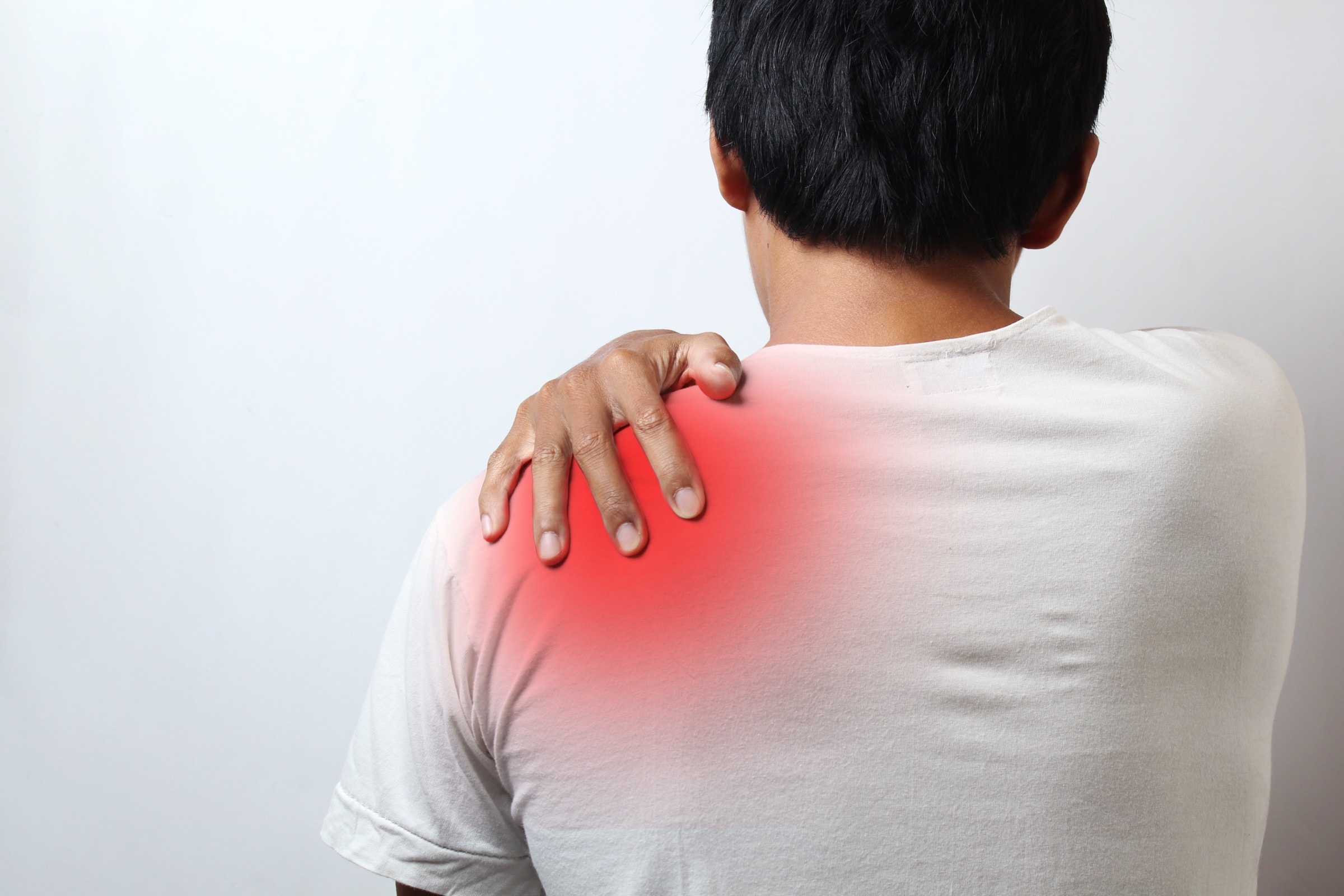
Pain Between the Shoulder Blades: What Is Usually Behind It
Pain between the shoulder blades usually comes from the muscles that sit there, mainly the rhomboids and middle trapezius, or from the lower neck sending pain down to that spot. Less often it comes from the heart, lungs or gallbladder. That is why a few warning signs need a doctor before anyone works on the muscles.
Learn moreHow Dr. Gordon treats upper back and shoulder blade painWhat it usually feels like
Most people describe a knot or a burning ache along the inner edge of one shoulder blade. It builds over a day at the computer or behind the wheel, and it may catch on a deep breath or a twist. Rubbing it helps, and then it comes right back.
The muscles between the shoulder blades
The rhomboids and middle trapezius draw the shoulder blades toward the spine. The levator scapulae runs from the side of the neck to the top corner of the shoulder blade, and the serratus muscles wrap around the ribs.
Together they hold your shoulder blades steady while your arms work in front of you. At a keyboard, a steering wheel or a phone, that means hours of low, steady effort with little rest. Carrying a child or heavy bags adds more. Over time, tight bands with tender trigger points can form. Stress adds to it, because many people hold tension in the upper back without noticing.
When the pain comes from the neck
The lower neck can send pain to the shoulder blade even when the neck itself does not hurt much.
In one study of 50 people who had surgery for a pinched nerve in the neck, 70 percent felt neck or shoulder blade pain before any arm or finger symptoms. Pain between the shoulder blades was linked to the C7 or C8 nerve roots, the lowest in the neck. Irritated joints in the lower neck can send pain to the shoulder blade too.
So when massage only helps for a day, I look at the neck. If the source is there, working on the shoulder blade alone gives short relief. The neck pain page covers that side.
When it is not the muscles at all
Heart, lung and gallbladder problems can occasionally cause upper back pain. The National Heart, Lung, and Blood Institute lists pain or discomfort in the back, shoulders, neck or jaw among the symptoms of a heart attack, along with chest discomfort, shortness of breath, sweating and nausea. It advises calling 9-1-1 even if you are not sure.
In my experience, muscle pain usually changes with movement, posture and pressure on the sore spot. Pain that does not change at all with how you move, or that comes with feeling unwell, should go to your primary care doctor first.
See a doctor first if you have upper back pain with chest pain or shortness of breath; neck pain with fever and a stiff neck; weakness, numbness or clumsiness in the arms or hands that is getting worse; trouble walking or new balance problems; pain after a significant fall or accident; dizziness, double vision, or trouble speaking or swallowing; or unexplained weight loss or a history of cancer. If you have any of these, contact your doctor or go to the nearest emergency department.
How I sort it out
The first visit runs 60 to 75 minutes. I review your imaging and any physician or physical therapy notes, screen your neck, map the muscles around the shoulder blade by hand and check how your upper back and ribs move.
When pressing on a muscle brings on your familiar ache, that points to trigger points. When neck testing brings it on, the neck is part of it. Often both are true. I am glad to work alongside your primary care doctor, orthopedist or physical therapist.
How it is treated
Dry needling releases deep trigger points in the rhomboids, trapezius and levator scapulae. Alongside dry needling, I use neuro-functional acupuncture, built on neuroscience and evidence-based practice. Unlike regular electroacupuncture, the needles and gentle electrical stimulation are mapped to the specific nerves involved, such as the nerves of the neck and upper back. It works in three ways. It neurorehabilitates, helping irritated tissues and nerve receptors recover. It neuromodulates, shifting the body's own pain-relieving chemistry. It neuroregulates, calming the nerve signals and circuits that keep referred pain going. You also get desk and movement guidance. The upper back and shoulder blade pain page covers the full plan. Most patients are seen weekly or every other week during active care, and results vary from person to person.
If you are not sure what is causing your pain, try the My Symptoms tool.
Questions people ask
Is pain under my left shoulder blade a sign of a heart problem?
Usually it is a muscle, but it can be the heart. A heart attack can cause pain in the back, shoulders, neck or jaw, often with chest discomfort, shortness of breath, sweating or nausea. If you have any of those, call 9-1-1 instead of waiting to see if it passes.
Why does it hurt when I take a deep breath?
These muscles and the joints of the upper back and ribs move with each breath, so tight muscles or stiff ribs can catch on a deep breath. Pain with breathing plus shortness of breath, fever or a cough needs a doctor first, since the lungs can cause it too.
Can stress make pain between my shoulder blades worse?
Yes. Desk posture and stress keep these muscles working all day, often without your noticing. Dropping your shoulders and taking a few slow breaths now and then gives them a break.
References
- Tanaka Y, et al. Cervical roots as origin of pain in the neck or scapular regions. Spine (Phila Pa 1976). 2006;31(17):E568-E573.
- National Heart, Lung, and Blood Institute. Heart attack: symptoms. National Institutes of Health. https://www.nhlbi.nih.gov/health/heart-attack/symptoms