Low Back Pain When You Breathe or Twist: The Quadratus Lumborum
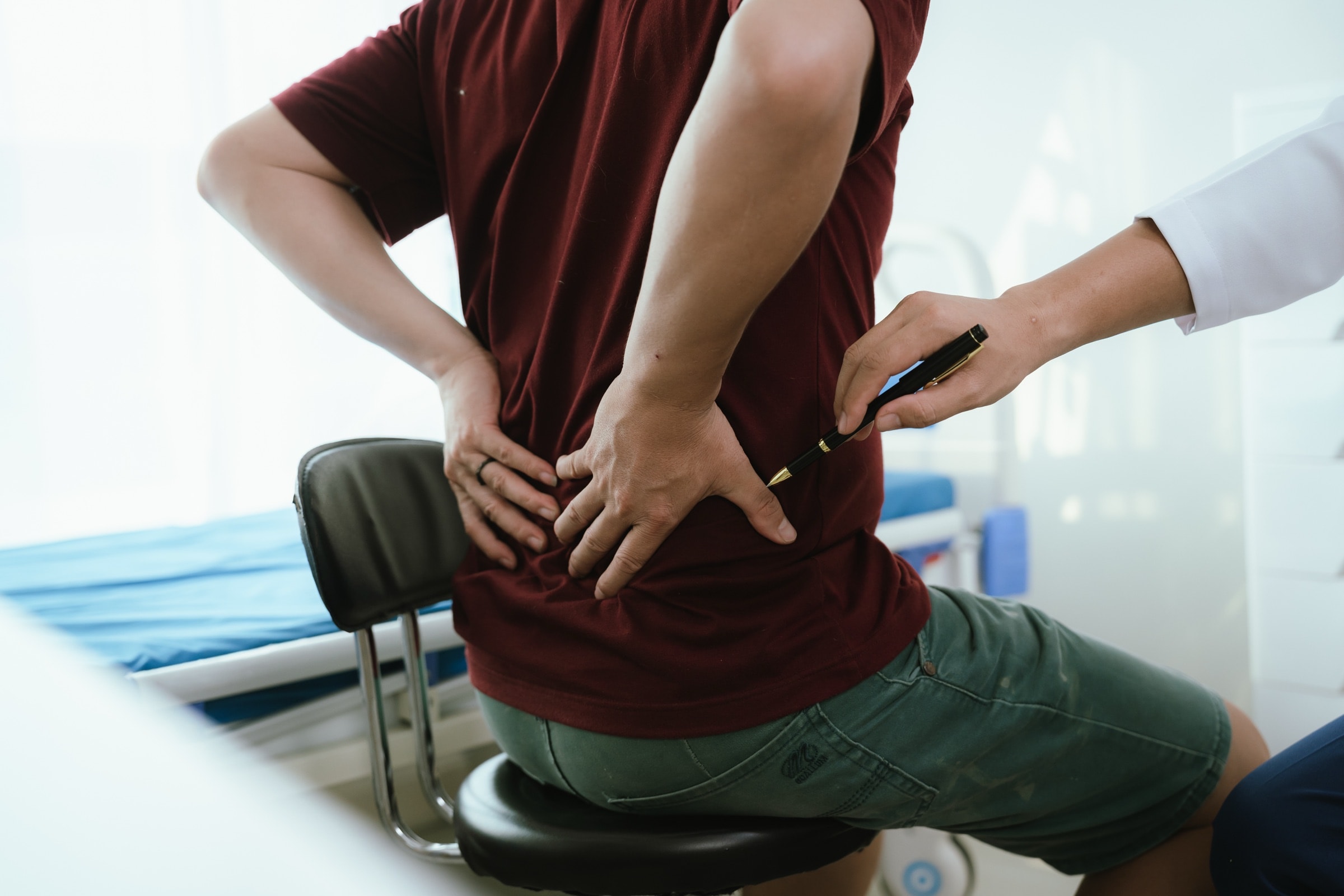
When low back pain catches as you take a deep breath, twist, roll over in bed or stand up from a chair, the quadratus lumborum is often part of the problem. This deep muscle runs from the top of the pelvis to the lowest rib and the spine, and it helps hold that rib steady when you breathe in. Trigger points in it can cause a deep ache just above the hip that flares with those everyday movements.
Learn moreHow Dr. Gordon treats back painWhere the QL sits
The quadratus lumborum, or QL, is a thick, square muscle deep in the low back, one on each side. It starts on the back half of the iliac crest, the rim of the pelvis you feel when you put your hands on your hips. It rises to attach to the lower edge of the 12th rib and to the bony side points of the top four lumbar vertebrae.
It lies deep to the long back muscles, with the kidney in front of it.
What it does, and why that hurts
The QL has three main jobs:
- Side bending. One side bends your trunk toward that side.
- Straightening up. Both sides together help extend the low back.
- Breathing. It steadies the 12th rib as you breathe in.
A deep breath asks the QL to steady the 12th rib, and an irritated muscle can answer with a catch of pain. Twisting, reaching to one side, rolling over in bed or getting out of a car all ask the QL on one side to bend or steady the trunk. Standing up from a chair asks both sides to straighten the spine, which is one reason the pain with sit to stand page often applies.
Trigger points in the QL
A trigger point is a tight, tender spot in a muscle that can refer pain somewhere else. In people with ongoing low back pain, the QL is a frequent place to find them.
In one study of 42 people with chronic low back pain that had no specific cause, active trigger points were most common in the quadratus lumborum, the iliocostalis lumborum and the gluteus medius. People with more active trigger points reported more intense pain and poorer sleep.
Because the QL attaches to the back of the pelvis, its pain can sit close to the sacroiliac joint, and the two are easy to confuse. Some people have both, and the exam checks each one.
When it may not be the muscle
Your primary care doctor, or an orthopedist or spine specialist, should evaluate back pain first, especially if it is new, severe or getting worse. Pain that changes with breathing is not always muscular. The National Heart, Lung, and Blood Institute lists sharp chest pain that gets worse when you breathe in deeply, cough or sneeze as a symptom of pleural disorders. The NIH kidney institute lists sharp pain in the back, side, lower abdomen or groin, blood in the urine and pain while urinating among the symptoms of kidney stones.
See a doctor first if you have new weakness, numbness or tingling that is spreading or getting worse; numbness in the saddle area or loss of bladder or bowel control; back pain with fever, chills or unexplained weight loss; pain after a significant fall or accident; back pain with a history of cancer; severe pain at night that does not change with position; sharp chest pain that gets worse when you breathe in; or blood in the urine or pain while urinating. If you have any of these, contact your doctor or go to the nearest emergency department.
How the exam and treatment work
The first visit runs 60 to 75 minutes. I review your imaging and notes, watch how you bend, twist, sit and stand, examine the back, hips and gluteals by hand, and check the spine, sacroiliac joints and hips.
Dry needling releases trigger points and protective spasm in the QL and the other deep back, gluteal and hip muscles. I have used dry needling for more than 18 years, with more than 40,000 documented dry needling visits. Alongside dry needling, I use neuro-functional acupuncture, built on neuroscience and evidence-based practice. Unlike regular electroacupuncture, the needles and gentle electrical stimulation are mapped to the specific nerves involved, such as the nerves of the low back and hip. It works in three ways. It neurorehabilitates, helping irritated tissues and nerve receptors recover. It neuromodulates, shifting the body's own pain-relieving chemistry. It neuroregulates, calming the nerve signals and circuits that keep low back pain going. Most patients are seen weekly or every other week during active care, and results vary from person to person.
If you are not sure what is causing your pain, try the My Symptoms tool.
Questions people ask
Can a disc problem cause QL trigger points?
Yes. A disc problem can make the muscles around it guard, and those guarding muscles can develop trigger points of their own. Your physician evaluates the disc, and the exam looks at the muscles.
Is it safe to needle a muscle so close to the kidney?
The kidney lies in front of the QL, so needle angle and depth matter. This is one of the reasons dry needling requires additional training. Tell me if you take blood thinners or have a bleeding disorder before treatment.
References
- Iglesias-Gonzalez JJ, et al. Myofascial trigger points, pain, disability, and sleep quality in patients with chronic nonspecific low back pain. Pain Med. 2013;14(12):1964-1970.
- Elsevier. Quadratus lumborum muscle. Complete Anatomy. https://www.elsevier.com/resources/anatomy/muscular-system/muscles-of-abdomen/quadratus-lumborum-muscle/22760
- National Heart, Lung, and Blood Institute. Pleural disorders: symptoms. NIH. Updated March 2022.
- National Institute of Diabetes and Digestive and Kidney Diseases. Symptoms and causes of kidney stones. NIH. Last reviewed May 2017.