
Pain Symptom
Back Pain
By Dr. Anthony J. Gordon, Doctor of Acupuncture | Last reviewed September 2026
Your back locks up when you bend, aches after sitting, and flares whenever you lift or sleep wrong. You have stretched, rested, maybe done physical therapy, and it keeps coming back. Most back pain comes from a pattern of guarded muscles, stiff joints and irritated nerves, and that pattern can be found and treated.
Prefer to talk it through? Call (516) 597-5400. Most new patients are seen within one to two weeks.
Overview
Understanding Back Pain
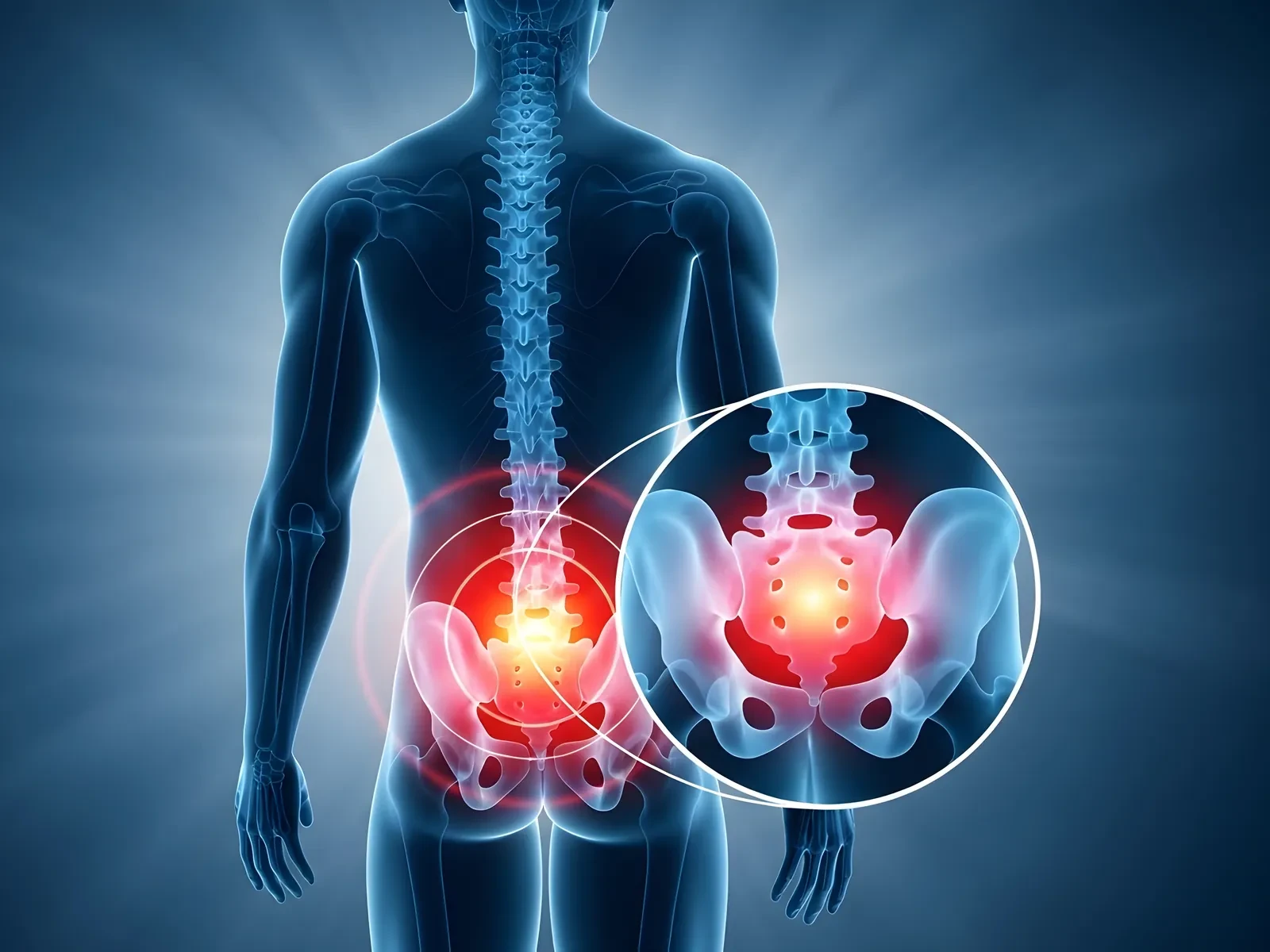
Low back pain is one of the most common reasons people see a doctor. In most cases, it is mechanical, meaning it comes from muscles, joints, discs and nerves rather than a serious disease. Scans often show changes such as disc bulges or arthritis, but those findings are also common in people without pain, so they do not always explain your symptoms.
What usually keeps back pain going is a combination of protective muscle spasm, trigger points in the deep back and hip muscles, stiffness in the facet or sacroiliac joints, and nerves that have become sensitive. The quadratus lumborum, multifidus, gluteal muscles and hip flexors are frequent sources. Posture, long sitting, lifting habits and stress all feed the cycle.
Your physician should rule out serious causes and red flags. Dr. Gordon's job is to identify which muscles, joints and nerves are driving your pain and treat them directly, so you can move without bracing for the next flare.
Back Pain at a Glance
Also called
Low back pain, lumbar pain, mechanical back pain
How common
Most adults experience it at some point, and many have repeated episodes
Common sources
Muscle spasm and trigger points, facet and SI joints, discs, irritated nerves
Common triggers
Lifting, bending, long sitting, poor sleep, stress, sudden increases in activity
Key muscles
Quadratus lumborum, multifidus, gluteals, hip flexors, deep hip rotators
The Gap in Care
What Tests Check, and What They Can Miss
Imaging shows structure, and it is useful when red flags are present. But many scan findings are common in people without pain, and they rarely show the muscle and nerve patterns that keep back pain going.
What routine testing is looking for
- Fractures or serious structural damage
- Severe disc herniation or nerve compression
- Infection or tumors
- Inflammatory arthritis
What often keeps symptoms going
- Trigger points in the quadratus lumborum and gluteals
- Protective spasm in the deep spinal muscles
- Hip flexor and hip rotator tightness
- Stiff facet or sacroiliac joints
- Nerves that have become sensitive to movement
These are found with a hands-on exam and movement testing.
Signs & Symptoms
Does This Sound Like You?
Symptoms vary from person to person. These are the patterns Dr. Gordon sees most often.
Aching across the low back
A dull or tight ache, often worse by the end of the day.
Sharp pain with bending or twisting
A catch or spasm when you move a certain way.
Stiffness in the morning
Difficulty getting going after sleep or rest.
Pain after sitting
Aching that builds in a chair or car.
Pain spreading to the buttock
Pain radiating into the buttock or hip.
Frequent flare-ups
Episodes that return with lifting, sleeping wrong or stress.
Root Causes
The Four Drivers Dr. Gordon Looks For
Most people have more than one of these in play. Finding which one leads makes treatment more efficient.
Muscle spasm and trigger points
Deep back and hip muscles guard after strain and develop trigger points that cause lasting pain.
Joint stiffness
Stiff facet and sacroiliac joints change how the spine moves and load the muscles around them.
Hip mobility limits
Tight hip flexors and rotators force the low back to do more work.
Nerve sensitivity
Irritated nerves make normal movement feel threatening and keep muscles guarding.
Your First Visit
How Dr. Gordon Evaluates Back Pain
The initial evaluation runs 60 to 75 minutes. You leave with a clear picture of what is driving your symptoms, a written plan, a realistic timeline, and in most cases your first treatment.
- 1
Records and history review
Dr. Gordon reviews your imaging, physician or physical therapy notes, medications and past treatments so he knows what has been ruled out and what has already been tried.
- 2
Movement testing
Dr. Gordon watches how you bend, twist, sit and stand to see which movements reproduce your pain.
- 3
Muscle and trigger point mapping
Hands-on assessment of the back, hips and gluteals to find the muscles driving your pain.
- 4
Nerve and joint screen
Dr. Gordon checks nerve tension and joint mobility in the spine, sacroiliac joints and hips.
- 5
Plan and coordination
A clear plan, plus communication with your physician, orthopedist or physical therapist when that helps your care.
When to see a physician first
- New weakness, numbness or tingling that is spreading or getting worse
- Numbness in the saddle area or loss of bladder or bowel control
- Back pain with fever, chills or unexplained weight loss
- Pain after a significant fall or accident
- Back pain with a history of cancer
- Severe pain at night that does not change with position
If you have any of these, contact your doctor or go to the nearest emergency department.
Bring to your first visit
Records
Recent lab results, imaging reports and specialist notes. These can also be faxed ahead.
Treatment history
A short list of what you have tried and what did or did not help.
Clothing
Something comfortable and loose fitting.
Treatment
How Dr. Gordon Treats It
These are the tools Dr. Gordon uses most often for back pain, chosen from your exam findings.
Orthopedic Dry Needling
Dr. Gordon has used dry needling for more than 18 years. Precise needling releases trigger points and protective spasm in the deep back, gluteal and hip muscles.
See all servicesNeuro-Functional Acupuncture
Electro-acupuncture along the lumbar nerve pathways to calm nerve sensitivity and reduce pain.
See all servicesMovement Plan & Team Coordination
Guidance on sitting, lifting and staying active, coordinated with your physician or physical therapist.
Referring provider? Contact the clinicWhat to Expect
A Typical Recovery Arc
Find the main driver
Dr. Gordon confirms which muscles and nerves are behind your symptoms and starts calming the most reactive areas. Many people notice early changes between visits.
Lower the baseline
Day-to-day symptoms ease, flares become shorter and less frequent, and normal routines start to feel more manageable.
Build resilience
Visits are spaced out as improvement holds. You leave with a maintenance and early-flare plan.
Most patients are seen weekly or every other week during active care. Individual results vary with how long symptoms have been present and how reactive they are. Progress is reassessed at every visit.
Not sure how to describe it? Put your pain or discomfort into words before your visit
I have had back and neck pain for over 10 years. ... Dr. Gordon took the time to listen to everything that has been bothering me. His knowledge, care, and expertise put me at ease. I cannot believe that I felt relief just after two visits.Kristen Sundack, Google Review
Back Pain Questions
Answers About Back Pain
Still unsure whether this is the right fit? Reach out before you book and Dr. Gordon will talk through your history with you.
Before You Book
General Questions

About Dr. Anthony J. Gordon
Dr. Anthony J. Gordon is a Doctor of Acupuncture licensed in New York and board certified. He holds ASE certification in intrapelvic and extrapelvic dry needling, along with advanced certifications in Functional Dry Needling and Neuro-Functional Acupuncture. With more than 18 years of clinical experience and over 3,000 complex cases treated, he focuses on pelvic, spinal and orthopedic conditions that have not responded to standard care, and works closely with each patient's physicians and physical therapists.
Read Dr. Gordon's full bioBook an Evaluation for Back Pain
Book a full evaluation with Dr. Gordon and find out which muscles, joints and nerves are behind your back pain.
Early morning, evening and weekend appointments available. Free on-site parking.
Further Reading
Low Back Pain When You Breathe or Twist: The Quadratus Lumborum
From the blog: A deep low back ache that catches when you breathe, twist or roll over in bed often involves the quadratus lumborum. What this muscle does and why it hurts.
Dry Needling vs Massage: Which One Does Your Muscle Pain Need?
From the blog: An honest look at dry needling and massage for muscle pain: what each one does, when massage is enough, when dry needling fits, and what the research shows.
Keep Reading