
Pain Condition
Piriformis Syndrome
By Dr. Anthony J. Gordon, Doctor of Acupuncture | Last reviewed September 2026
The pain is deep in your buttock, on one side. It builds when you sit, especially on a hard surface or with your wallet in your back pocket, and it may shoot down the back of your leg. Stretching helps for a moment and then it comes back. The piriformis sits deep beneath the gluteals, right next to the sciatic nerve, and when it tightens, it can irritate the nerve directly.
Prefer to talk it through? Call (516) 597-5400. Most new patients are seen within one to two weeks.
Overview
Understanding Piriformis Syndrome
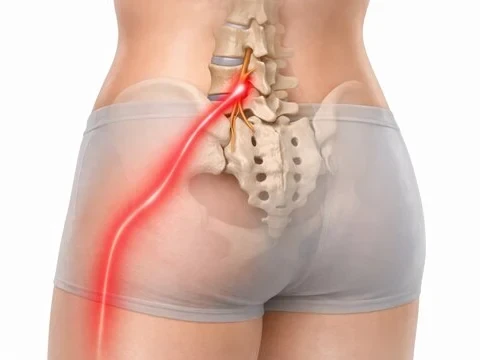
The piriformis is a small, deep muscle that runs from the sacrum to the top of the thigh bone. It rotates the hip outward and helps stabilize the pelvis. The sciatic nerve passes directly beneath it, and in some people, through it.
Piriformis syndrome occurs when this muscle becomes tight, develops trigger points or thickens, irritating the sciatic nerve. It causes deep buttock pain and sometimes sciatic-type pain down the leg. It is often triggered by prolonged sitting, running, sudden increases in activity, falls on the buttock, or compensation for back or hip problems. Other deep rotators, called the gemelli and obturator internus, can cause similar symptoms, which is why the broader term deep gluteal syndrome is also used.
Your physician may rule out spinal causes of sciatica. Because the piriformis lies deep, it is hard to release with massage or stretching alone. Dry needling reaches it directly.
Piriformis Syndrome at a Glance
Also called
Deep gluteal syndrome
Where it is felt
Deep in the buttock, sometimes down the back of the leg
Common triggers
Prolonged sitting, running, sudden activity increases, falls, compensation for back or hip problems
Often mistaken for
Disc-related sciatica, SI joint pain
Why needling helps
The muscle lies deep beneath the gluteals, beyond easy reach of massage
The Gap in Care
What Tests Check, and What They Can Miss
Sciatic-type pain is often assumed to come from the spine. When the spine checks out, the piriformis and deep rotators are the next place to look.
What routine testing is looking for
- Disc herniation
- Spinal stenosis
- SI joint disease
- Hip joint problems
What often keeps symptoms going
- Piriformis tension and trigger points
- Sciatic nerve irritation in the buttock
- Other deep rotators such as the obturator internus
- Weak gluteals that make the piriformis overwork
- Sitting habits that compress the area
These are found with targeted palpation and nerve testing in the buttock.
Signs & Symptoms
Does This Sound Like You?
Symptoms vary from person to person. These are the patterns Dr. Gordon sees most often.
Deep buttock pain
A deep ache on one side of the buttock.
Worse sitting
Pain building while seated, especially on hard surfaces.
Pain down the leg
Sciatic-type pain traveling down the back of the thigh.
Pain with hip rotation
Pain crossing the legs or turning the leg inward.
Pain climbing stairs or running
Pain increasing with activity.
Temporary relief from stretching
Stretching helps briefly, then pain returns.
Root Causes
The Four Drivers Dr. Gordon Looks For
Most people have more than one of these in play. Finding which one leads makes treatment more efficient.
Piriformis tension
A tight piriformis compresses the sciatic nerve.
Trigger points
Trigger points refer pain through the buttock and down the leg.
Gluteal weakness
Weak gluteals force the piriformis to overwork.
Sitting compression
Sitting presses the muscle and nerve together.
Your First Visit
How Dr. Gordon Evaluates Piriformis Syndrome
The initial evaluation runs 60 to 75 minutes. You leave with a clear picture of what is driving your symptoms, a written plan, a realistic timeline, and in most cases your first treatment.
- 1
Records and history review
Dr. Gordon reviews your imaging, physician or physical therapy notes, medications and past treatments so he knows what has been ruled out and what has already been tried.
- 2
Piriformis and deep rotator palpation
Targeted assessment of the piriformis, gemelli and obturator internus.
- 3
Nerve testing
Tests to check sciatic nerve irritation in the buttock versus the spine.
- 4
Hip strength and movement
Dr. Gordon checks gluteal strength and hip rotation.
- 5
Plan and coordination
A clear plan, plus communication with your physician, orthopedist or physical therapist when that helps your care.
When to see a physician first
- New weakness, numbness or tingling that is spreading or getting worse
- Numbness in the saddle area or loss of bladder or bowel control
- Back pain with fever, chills or unexplained weight loss
- Pain after a significant fall or accident
- Back pain with a history of cancer
- Severe pain at night that does not change with position
If you have any of these, contact your doctor or go to the nearest emergency department.
Bring to your first visit
Records
Recent lab results, imaging reports and specialist notes. These can also be faxed ahead.
Treatment history
A short list of what you have tried and what did or did not help.
Clothing
Something comfortable and loose fitting.
Treatment
How Dr. Gordon Treats It
These are the tools Dr. Gordon uses most often for piriformis syndrome, chosen from your exam findings.
Orthopedic Dry Needling
Dr. Gordon has used dry needling for more than 18 years. Dry needling reaches the piriformis and deep rotators directly, releasing trigger points that massage and stretching cannot reach.
See all servicesNeuro-Functional Acupuncture
Electro-acupuncture along the sciatic nerve pathway to calm irritation.
See all servicesSitting Plan & Team Coordination
Sitting and activity guidance and gluteal strengthening, coordinated with your physical therapist.
Referring provider? Contact the clinicWhat to Expect
A Typical Recovery Arc
Find the main driver
Dr. Gordon confirms which muscles and nerves are behind your symptoms and starts calming the most reactive areas. Many people notice early changes between visits.
Lower the baseline
Day-to-day symptoms ease, flares become shorter and less frequent, and normal routines start to feel more manageable.
Build resilience
Visits are spaced out as improvement holds. You leave with a maintenance and early-flare plan.
Most patients are seen weekly or every other week during active care. Individual results vary with how long symptoms have been present and how reactive they are. Progress is reassessed at every visit.
Not sure how to describe it? Put your pain or discomfort into words before your visit
As a professional ballet dancer I'm always looking for a knowledgeable doctor with effective treatment methods for my injuries. Within 3 visits my hip injury, which I had been dealing with for months, was gone. I've worked with several physical therapists and tried many alternative treatments and none compared to the dry needling I received here!Max Lippman, Google Review
Piriformis Syndrome Questions
Answers About Piriformis Syndrome
Still unsure whether this is the right fit? Reach out before you book and Dr. Gordon will talk through your history with you.
Before You Book
General Questions

About Dr. Anthony J. Gordon
Dr. Anthony J. Gordon is a Doctor of Acupuncture licensed in New York and board certified. He holds ASE certification in intrapelvic and extrapelvic dry needling, along with advanced certifications in Functional Dry Needling and Neuro-Functional Acupuncture. With more than 18 years of clinical experience and over 3,000 complex cases treated, he focuses on pelvic, spinal and orthopedic conditions that have not responded to standard care, and works closely with each patient's physicians and physical therapists.
Read Dr. Gordon's full bioFurther Reading
Is It Sciatica or Piriformis Syndrome? How to Tell the Difference
From the blog: Buttock pain that runs down the leg is not always a disc. How piriformis syndrome differs from spine-related sciatica, and how an exam tells them apart.
Book an Evaluation for Piriformis Syndrome
Book a full evaluation with Dr. Gordon and find out whether your piriformis is behind your pain.
Early morning, evening and weekend appointments available. Free on-site parking.
Keep Reading