Enlarged Prostate or Tight Pelvic Floor? Why Urinary Symptoms in Men Are Not Always the Prostate
A slow start, a weak stream and dribbling are classic signs of an enlarged prostate, but a pelvic floor that does not relax during urination can cause the same symptoms, at any age. Many older men have both. Your urologist checks the prostate first, and the pelvic floor is worth a look when the prostate does not explain the whole picture.
Learn moreHow Dr. Gordon treats BPH symptomsTwo places the flow can slow down
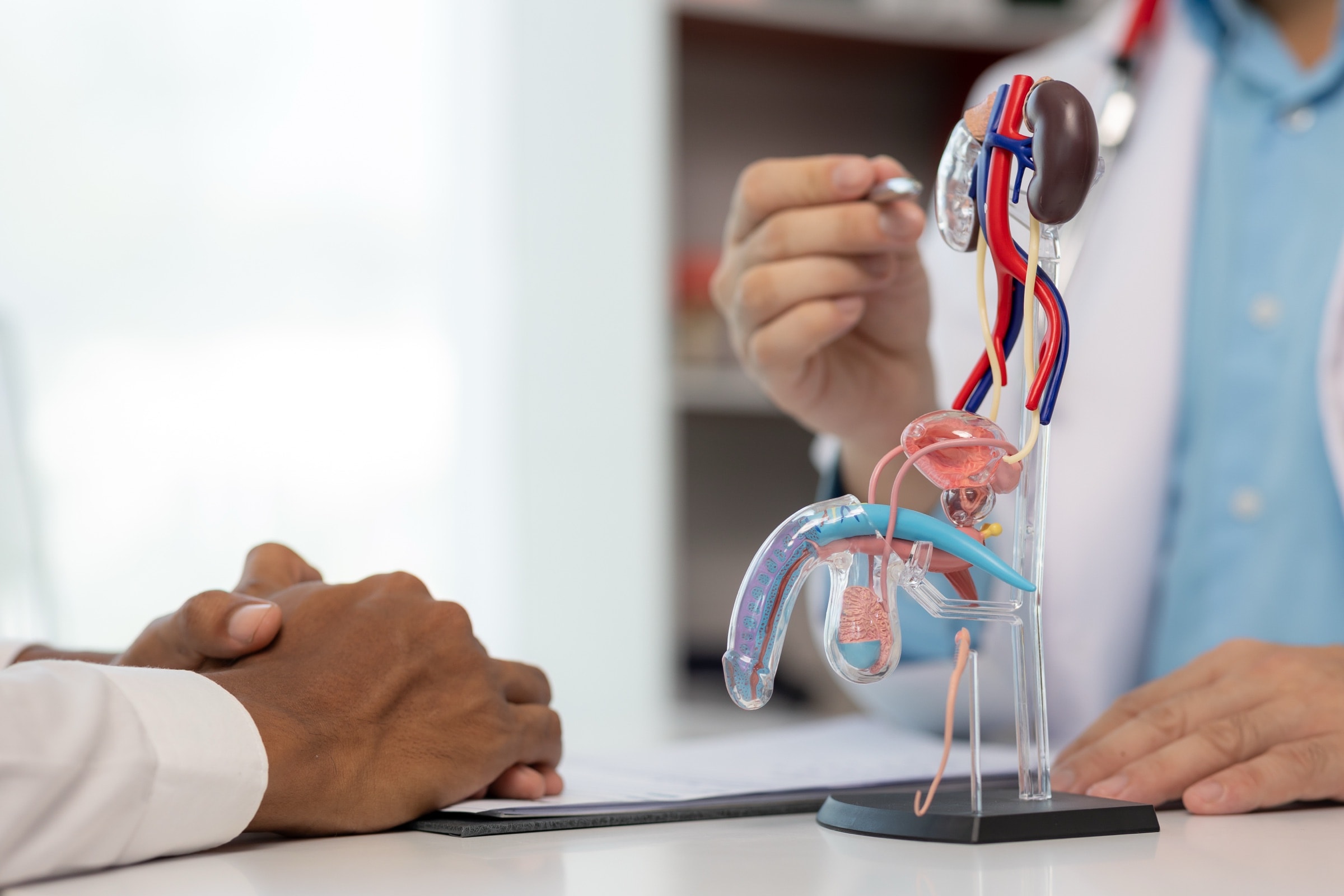
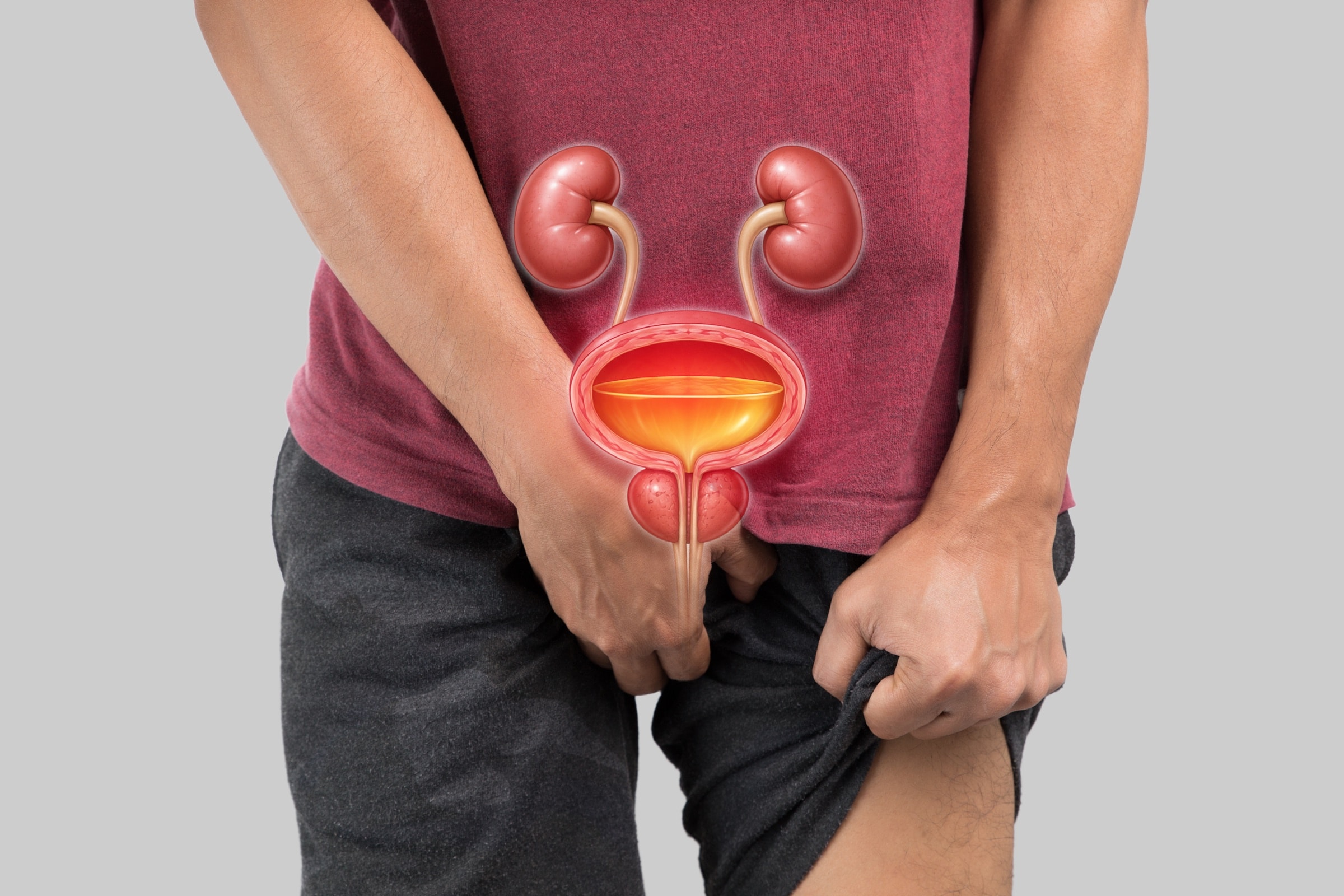
To pass urine, the bladder squeezes while the outlet opens. In men, the urethra runs through the prostate, then through the pelvic floor and its sphincter muscle.
Benign prostatic hyperplasia (BPH) is a non-cancerous enlargement of the prostate that narrows the urethra from the inside. It becomes more common with age. The National Institutes of Health estimates it affects 5 to 6 percent of men aged 40 to 64, and 29 to 33 percent of men 65 and older.
A tight pelvic floor slows flow from the outside. To start the stream, the pelvic floor and the sphincter must relax while the bladder contracts. If they stay partly closed, urine waits, a pattern I cover on the hesitant urination page.
The symptoms look almost the same, from a weak stream to dribbling and getting up at night, so symptoms alone cannot tell you the cause.
Clues that point toward the prostate
- Symptoms that came on gradually over years, later in life.
- An enlarged prostate on your urologist's exam or ultrasound, with flow testing that fits a blockage.
- Clear improvement on medicine your urologist prescribed for the prostate.
The National Institutes of Health notes that BPH symptoms or difficulty urinating may not be directly related to the size of your prostate.
Clues that point toward the pelvic floor
- Symptoms at a younger age, or that started during a stressful stretch.
- A stream that is worse when you are rushed, in a public restroom or when someone is nearby.
- An ache in the perineum, pain with ejaculation, or discomfort that builds with sitting.
- Straining with bowel movements too, which can point to pelvic floor dyssynergia.
- Little change on prostate medicine.
In one study of 87 men aged 40 or younger with urinary symptoms lasting more than six months, the most common finding on detailed bladder testing was a blockage at the bladder outlet, in about 43 percent. The next most common, in about 29 percent, was dysfunctional voiding, a pattern in which the muscles around the urethra tighten during urination when they should relax.
Why many men have both
The two often feed each other. Years of pushing against a narrowed outlet can train the pelvic floor to brace and strain, which tightens it further. A bladder that has worked against resistance for a long time can also become more reactive, sending urge signals earlier and more often. This may be one reason prostate treatment helps some men only part of the way.
Start with your urologist
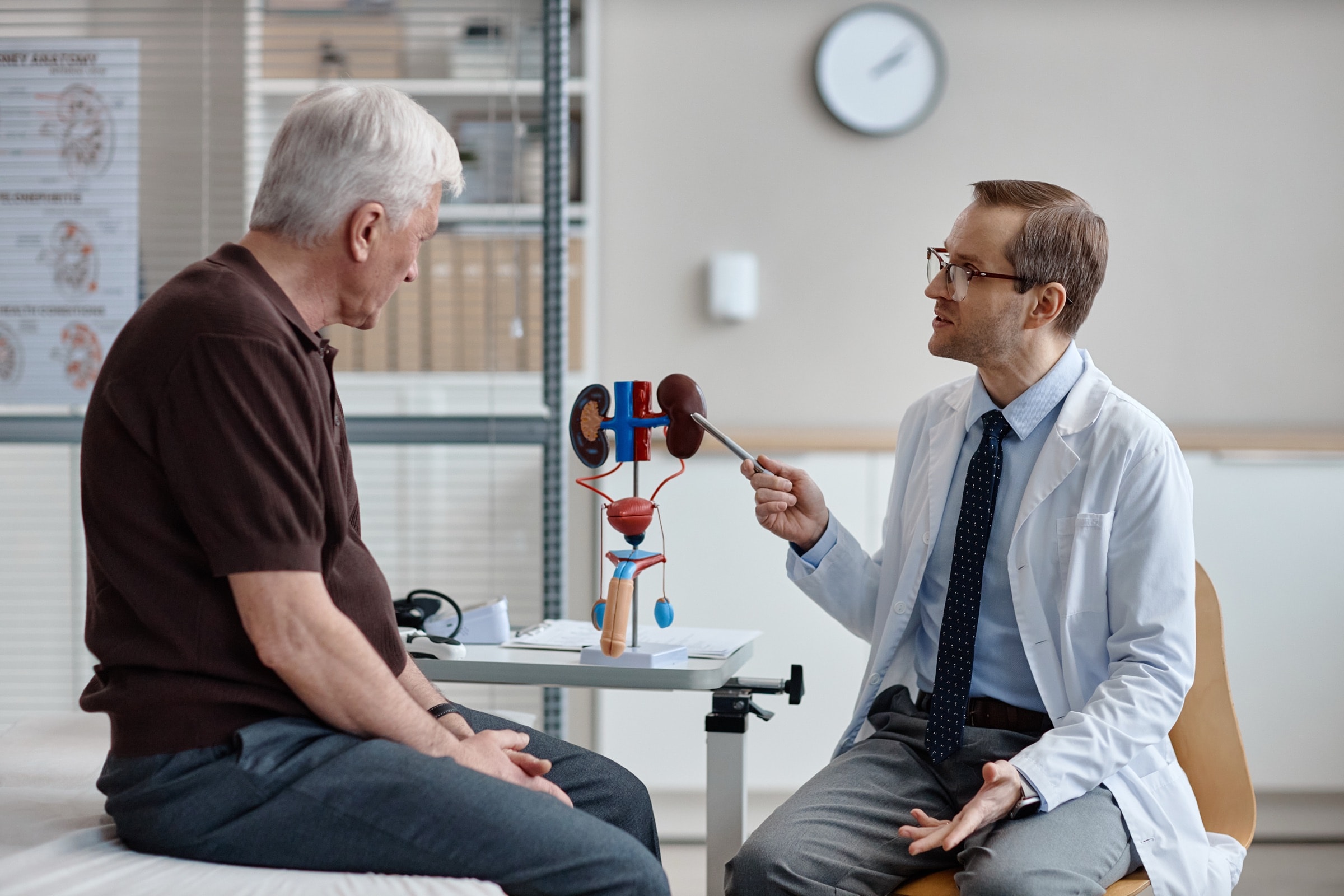
Infection, bladder problems, prostatitis or prostate cancer can cause similar symptoms, so a urologist checks first. Tests may include a urine test, a PSA blood test, flow and bladder pressure testing, a look inside the bladder or an ultrasound.
Where pelvic floor care fits
The first visit runs 60 to 75 minutes. I review your urology notes, PSA history and flow studies, then examine the lower abdomen, hips and pelvic floor from the outside, with no internal exam.
Dry needling releases tension in the pelvic floor and hip muscles so the pelvic floor can relax more fully when you urinate. Alongside dry needling, I use neuro-functional acupuncture, built on neuroscience and evidence-based practice. Unlike regular electroacupuncture, the needles and gentle electrical stimulation are mapped to the specific nerves involved, such as the sacral nerves. It works in three ways. It neurorehabilitates, helping irritated tissues and nerve receptors recover. It neuromodulates, shifting the body's own pain-relieving chemistry. It neuroregulates, calming the nerve signals and circuits that keep urgency, frequency and night waking going. It does not shrink the prostate, and it works alongside your urologist's plan. The BPH page and the straining to urinate page cover the details. Results vary from person to person.
See a doctor first if you have fever or chills with pelvic or urinary symptoms; inability to urinate; visible blood in the urine or semen; sudden, severe testicular pain or swelling; a new lump in the testicle; or new numbness in the saddle area or loss of bladder or bowel control. If you have any of these, contact your doctor or go to the nearest emergency department.
If you are not sure what is causing your symptoms, try the My Symptoms tool.
Questions people ask
Why would a younger man have a weak stream?
BPH becomes more common with age, so in younger men other causes come up more often, including a narrowed bladder outlet and a pelvic floor that does not relax. Infection and prostatitis also need to be ruled out. A urologist can sort out which one applies.
What is a urodynamic study, and do I need one?
It measures pressure and flow as your bladder fills and empties, and can help show whether the outlet is blocked or the muscles are tightening when they should relax. Your urologist decides whether you need one.
What should I track before my urology visit?
For a few days, write down how often you go, how often you wake at night, what you drink and when, and when the stream is better or worse. Note any pain too. That record helps your urologist and me see the pattern.
References
- National Institute of Diabetes and Digestive and Kidney Diseases. Enlarged Prostate (Benign Prostatic Hyperplasia). niddk.nih.gov. Last reviewed June 2024.
- Jamzadeh AE, et al. Urodynamic characterization of lower urinary tract symptoms in men less than 40 years of age. World J Urol. 2014;32(2):469-473.