Dry Needling vs Acupuncture: What Is the Difference?
Dry needling and acupuncture use the same very fine, solid needles. The difference is the map. Dry needling follows muscles, trigger points and nerves using modern anatomy, while traditional acupuncture follows acupuncture points and channels. I am trained in both, and most people with chronic pain do best when the two are used together.
Learn moreHow Dr. Gordon uses dry needlingThe difference between dry needling and acupuncture
Both treatments use thin, solid filament needles. Nothing is injected, which is where the word "dry" comes from. What changes is how each point is chosen.
- Dry needling is guided by Western anatomy. Needles go into tight bands of muscle called trigger points, into motor points, and near the nerves that supply those muscles.
- Traditional acupuncture places needles along acupuncture channels, based on traditional meridian theory.
- Neuro-functional acupuncture is a third option. It is built on neuroscience and evidence-based practice. It uses acupuncture needles, but each point is chosen for its closeness to specific nerves, nerve plexuses and spinal segments. It is a post-graduate specialty.
Dry needling grew out of acupuncture
Dry needling is often presented as something new. It is better understood as a specialized branch of acupuncture that requires additional training: the deep needling techniques that work directly in the muscle. There are several ways to perform it, including trigger point needling, motor point needling and intramuscular stimulation.
The Chinese term for acupuncture, zhen jiu, pairs the needle (zhen) with moxa, a gentle heat therapy. At its root, acupuncture is needle therapy. Its oldest classic, the Huangdi Nei Jing (the Yellow Emperor's Inner Classic), is about 2,000 years old, and its second half, the Ling Shu, is devoted largely to needling.
The Ling Shu describes needling between the muscles to treat muscle pain, and needling deep into a muscle in several directions, like a bird's footprint. That is close to the way a needle is redirected within a muscle in dry needling today. Its chapter on the sinew channels, the network of muscles and tendons, gives a simple rule: take the painful spot as the point. Trigger points are found and treated much the same way now.
Some say the twitch response is what sets dry needling apart. That is not new either. Acupuncture has long described de qi, the arrival of qi: the sensations felt when a needle reaches the right place, including a deep ache, heaviness, and sometimes a twitch or flicker in the muscle. The Ling Shu teaches that needling works when the qi arrives. Acupuncturists have felt these twitches under the needle for centuries, whether they aimed for them or not, and used them as a sign they had found the spot.
The people who wrote these texts knew muscle well. Soldiers were wounded and treated in war, and animals were butchered and prepared for food. They saw muscle layers, tendons, and the firm scar tissue that forms as a wound heals. It is no surprise their needling speaks of muscles, sinews and the spaces between them.
The name itself is only about 40 years old. In 1979, the Czech neurologist Karel Lewit showed that the relief from trigger point injections came from the needle, not the drug. Dr. Janet Travell, the American physician who pioneered trigger point therapy, used the term "dry needling" in her 1983 trigger point manual for needling a trigger point without injecting anything. What modern dry needling adds is Western anatomy language and research on trigger points and nerves. The needle, and the idea of treating the muscle directly, are about 2,000 years older.
What dry needling does
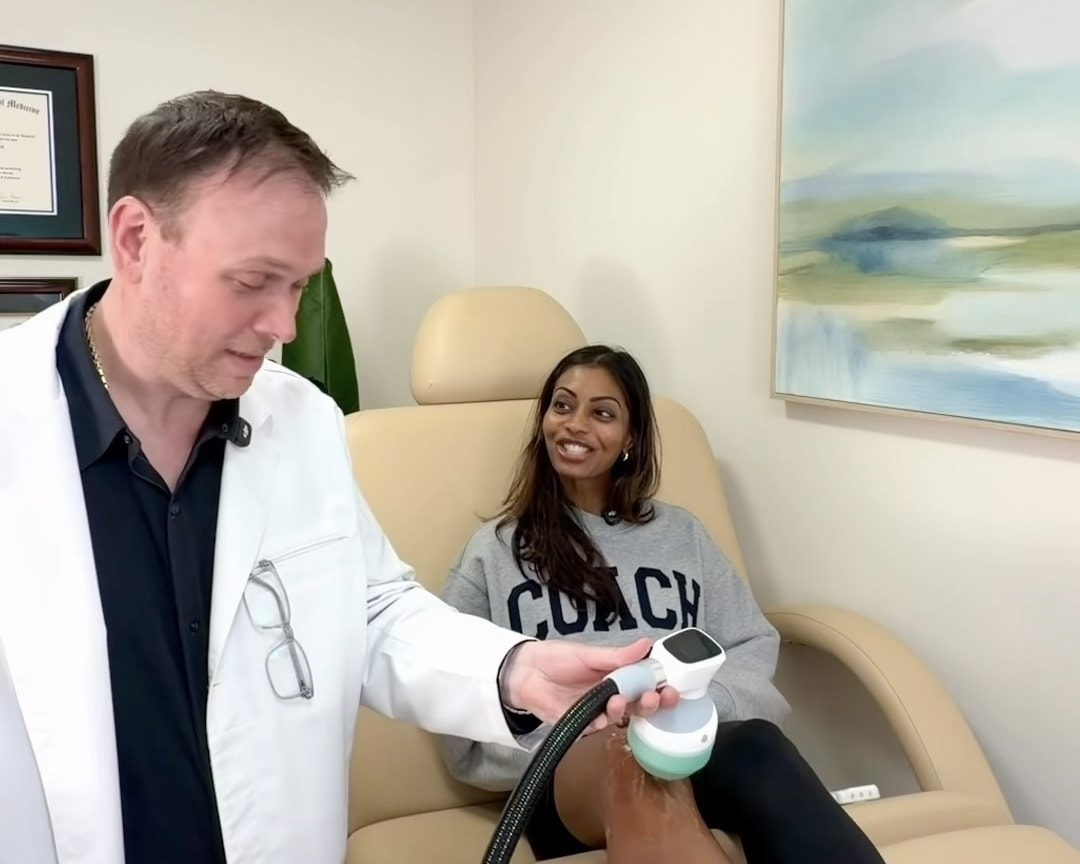
When the needle reaches a trigger point, the muscle often twitches and then lets go. That release helps break the cycle of pain and spasm, restore normal muscle length, and bring blood flow back to the area.
I think of this as working on the hardware: the physical tension held in the muscle itself.
What neuro-functional acupuncture does
Some pain is not only in the muscle. When pain goes on for months, the nervous system can become sensitized and keep sending pain signals after the tissue has calmed down.
Neuro-functional acupuncture targets those nerve pathways to calm that sensitivity and restore normal function. Unlike regular electroacupuncture, the needles and gentle electrical stimulation are mapped to the specific nerves involved. It works in three ways. It neurorehabilitates, helping irritated tissues and nerve receptors recover. It neuromodulates, shifting the body's own pain-relieving chemistry. It neuroregulates, calming the nerve signals and circuits that keep pain going. If dry needling works on the hardware, this works on the software.
Why most chronic pain needs both
Most chronic pain has a hardware part and a software part. Long-standing sciatica is a good example. There may be tight deep hip muscles adding pressure, and an irritated, oversensitive nerve on top of that.
Treating only the muscle, or only the nerve, often leaves part of the problem in place. So I often use dry needling and neuro-functional acupuncture in the same visit. Sometimes I add electroacupuncture, a gentle current through the needles that strengthens the effect on the nervous system. You can read more about each approach on the services page.
Using electricity for pain may be nearly as old as the needle. Around 45 AD, Scribonius Largus, physician to the Roman emperor Claudius, recommended placing a live torpedo fish, an electric ray, on the forehead for headaches and under the feet for gout. From there, it is not a big leap to electroacupuncture. The idea is the same, a gentle current to calm pain, but the needle carries it straight to the muscle or nerve being treated, and the current comes from a small device instead of a fish.
Which one is right for you?
You do not need to decide before you come in. At the first visit I go over your history and what you have tried, look at how you move, and find which muscles and nerves are involved. I explain what I find and what I recommend before any treatment starts.
As a rough guide:
- Pain that feels like a tight knot, band or deep ache, often worse with certain movements, usually points to muscle and trigger points. Dry needling leads here.
- Burning, tingling, shooting pain, or pain that has spread beyond where it started, often points to nerve involvement. Neuro-functional acupuncture plays a bigger role here.
- Pain that has lasted months and has a little of both is the most common picture, and it usually gets both.
The My Symptoms page walks through common causes of pain by body area.
Questions people ask
Is dry needling just acupuncture with a different name?
Not quite. Deep needling into muscle has been part of acupuncture for about 2,000 years, and dry needling is a specialized branch of it that requires additional training. What it adds is modern anatomy language and research on trigger points and nerves, while traditional acupuncture also works with channels and points. Being trained in both lets me choose what fits the problem.
Does one feel stronger than the other?
Dry needling often brings a small pinch, then a brief deep ache or twitch as the muscle releases. Acupuncture usually feels milder. With either one, I check in throughout and adjust to your comfort.
Can I have both in the same visit?
Yes. Combining them is a regular part of how I treat chronic and complex pain, and treatment can start at the first visit.
References
- Unschuld PU. Huang Di Nei Jing Ling Shu: The Ancient Classic on Needle Therapy. University of California Press; 2016.
- Lewit K. The needle effect in the relief of myofascial pain. Pain. 1979;6(1):83-90.
- Travell JG, Simons DG. Myofascial Pain and Dysfunction: The Trigger Point Manual. Williams and Wilkins; 1983.
- Legge D. A history of dry needling. Journal of Musculoskeletal Pain. 2014;22(3):301-307.
- Kellaway P. The part played by electric fish in the early history of bioelectricity and electrotherapy. Bulletin of the History of Medicine. 1946;20:112-137.