Painful Periods: When Cramps Are More Than Cramps
Common period cramps come from the uterus itself, with no disease behind them. Doctors call this primary dysmenorrhea. Cramps that start later in life, keep getting worse, or come with pain at other times of the month may be secondary dysmenorrhea, caused by a condition such as endometriosis or fibroids. That kind of pain needs a gynecologist's exam first. In either case, tight muscles in the pelvis, belly and low back can make the pain stronger.
Learn moreHow Dr. Gordon treats pain with periodsWhy periods hurt at all
The uterus is a muscle. Each month it makes prostaglandins, hormone-like substances that make it contract. More prostaglandin activity means stronger cramps, usually felt low in the belly as a sharp or aching pain that comes and goes.
MedlinePlus, the National Library of Medicine's health site, calls painful periods the leading cause of lost time from school and work among women in their teens and 20s.
Primary or secondary: the difference
Primary dysmenorrhea begins around the time periods first start, in otherwise healthy young women, and in most cases nothing is wrong with the pelvic organs.
Secondary dysmenorrhea develops later, in women who have had normal periods. It is often related to a problem in the uterus or pelvis, such as:
- Endometriosis, where tissue similar to the uterine lining grows outside the uterus
- Adenomyosis, where that tissue grows into the muscular wall of the uterus
- Fibroids
- A pelvic infection, or a copper IUD
Clues that cramps may be more than cramps
Reasons to see your gynecologist:
- Period pain that started, or got much worse, years after your periods began
- Pain that continues after your period ends, or shows up at other times of the month
- Pain with sex, bowel movements or urination
- Passing clots, or other new symptoms along with the pain
- Pain that treatment has not relieved after about three months
The endometriosis page and the adenomyosis page explain how each one can drive pain.
Your gynecologist comes first
A gynecologist is the right first stop for painful periods. Your gynecologist can examine you, order imaging when needed, and treat the cause with medication, hormonal options or surgery. MedlinePlus lists simple self-care, such as a heating pad on the lower belly, regular walking and an over-the-counter anti-inflammatory medicine timed around your period. Ask your doctor what is right for you.
See a doctor first if you have fever or chills with pelvic pain; unusual discharge, sores or lesions; bleeding after menopause, or bleeding heavy enough to soak a pad or tampon every hour; sudden, severe pelvic or abdominal pain; possible pregnancy with new pelvic pain; or new numbness in the saddle area or loss of bladder or bowel control. If you have any of these, contact your doctor or go to the nearest emergency department.
The muscle side of period pain
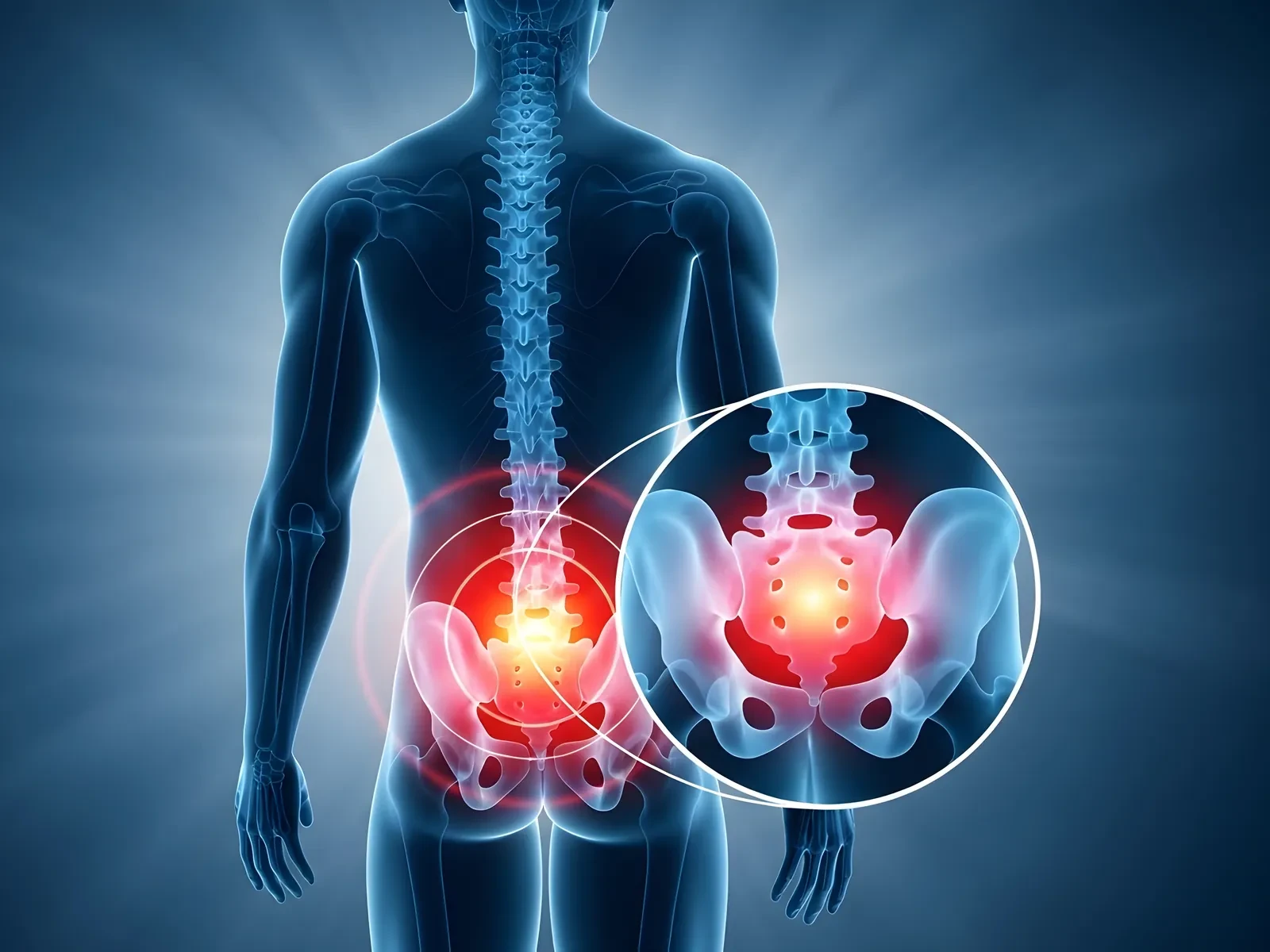
Whatever the cause, the pelvic floor tends to guard against monthly pain, and that guarding can make cramps feel stronger. Trigger points in the abdominal wall and tension in the low back and sacrum add their own ache. In some women the tension lingers between periods, so each cycle starts from a tighter baseline.
That is the part I look at, alongside your gynecologist's care, never instead of it.
What the research says about acupuncture
Acupuncture is widely used for period pain, but the research has limits. A 2016 Cochrane review pooled 42 trials with 4,640 women with primary dysmenorrhea. The authors found insufficient evidence to say whether acupuncture or acupressure works, and they rated the quality of the evidence as low or very low. Results against sham treatment were inconsistent.
So I do not promise results. In my clinic, acupuncture is one part of a plan that also treats the muscles your exam shows are tight.
What a visit looks like
The first visit runs 60 to 75 minutes. I assess the abdominal wall, low back, sacrum and hips. The pelvic floor muscles are examined from the outside, with no internal exam, and you are draped for comfort.
Dry needling releases tension in these muscles. For the deep pelvic floor, the needles go in through the skin of the buttock, perineum or inner thigh, never through the vagina or rectum. Alongside dry needling, I use neuro-functional acupuncture, built on neuroscience and evidence-based practice. Unlike regular electroacupuncture, the needles and gentle electrical stimulation are mapped to the specific nerves involved, such as the sacral and lumbar nerves. It works in three ways. It neurorehabilitates, helping irritated tissues and nerve receptors recover. It neuromodulates, shifting the body's own pain-relieving chemistry. It neuroregulates, calming the nerve signals and circuits that keep cramping pain going. Visits are timed around your cycle and coordinated with your gynecologist. Many people start with treatment across two to three cycles, and results vary from person to person.
If you are not sure what is causing your pain, try the My Symptoms tool.
Questions people ask
Why does my period pain spread to my back and legs?
Many women feel period pain in the low back or legs as well as the belly, and tight low back, hip and pelvic floor muscles can add to it. Pain down one leg with numbness or weakness, or pain unrelated to your cycle, should be checked by your doctor.
Should I track my symptoms before my appointment?
Yes. Note when pain starts and stops, how strong it is, how heavy the bleeding is, and what helps. Bring the notes to your gynecologist.
My gynecologist found nothing wrong. Is it still worth getting checked?
If the pain still affects your life, yes. The muscles of the pelvic floor, belly and low back are not part of every routine exam, and they can be checked and treated.
References
- MedlinePlus. Painful menstrual periods. U.S. National Library of Medicine. Reviewed 2026. https://medlineplus.gov/ency/article/003150.htm
- Smith CA, et al. Acupuncture for dysmenorrhoea. Cochrane Database Syst Rev. 2016;4:CD007854.