Can Tight Pelvic Floor Muscles Cause Bladder Symptoms?
Yes. Tight, irritated pelvic floor muscles can cause urgency, frequency, night-time trips, burning and trouble emptying, even when the bladder itself is healthy. A review published in October 2026 in the journal Medicina brings the research on this together and lays out how it may happen: trigger points in the pelvic floor keep feeding signals into the nervous system, and the body can feel those signals as a bladder problem.
Learn morePelvic floor dry needling with Dr. Gordon"Your bladder tests are normal"
Many of the people I see for bladder symptoms have already had urine cultures, an ultrasound and sometimes a cystoscopy. Some have taken several rounds of antibiotics for infections their cultures never confirmed. Others were told they have an overactive bladder and given a pill that helped a little or not at all.
Normal tests are good news, because they rule out infection and other serious problems. They just do not explain why you still feel the urge every 30 minutes. That is the point where the muscles around the bladder deserve a closer look.
What the new review says
Jordan Barber and Christina Biancaniello reviewed 17 published papers on pelvic floor muscle problems and lower urinary tract symptoms, the medical name for urgency, frequency, leaking, burning and trouble starting or finishing urination. They propose that:
- Active trigger points in the pelvic floor send a steady stream of pain and pressure signals into the nervous system.
- The nervous system processes that muscle input, and it can be felt as bladder urgency, fullness or burning.
- Checking the pelvic floor in people with these symptoms may improve diagnosis and lead to more targeted treatment.
This matches what I see in practice. The pelvic floor muscles and the bladder are supplied by nerves from the same low part of the spine, so it makes sense that one can be mistaken for the other. When I press on a trigger point and a patient says, "that is the urge I get," it is a strong clue the muscle is part of the story.
This is a review that proposes a model, not a treatment trial, and the authors call for more studies to test it. It does not mean every bladder symptom comes from muscle. It means the pelvic floor is worth checking.
Bladder symptoms the pelvic floor can drive
- Urgency and frequency, including waking at night to urinate
- Leaking with urgency
- Burning without infection and pain with urination
- Bladder pain and interstitial cystitis
- Hesitant urination and straining to urinate
- A feeling of incomplete emptying
What I check
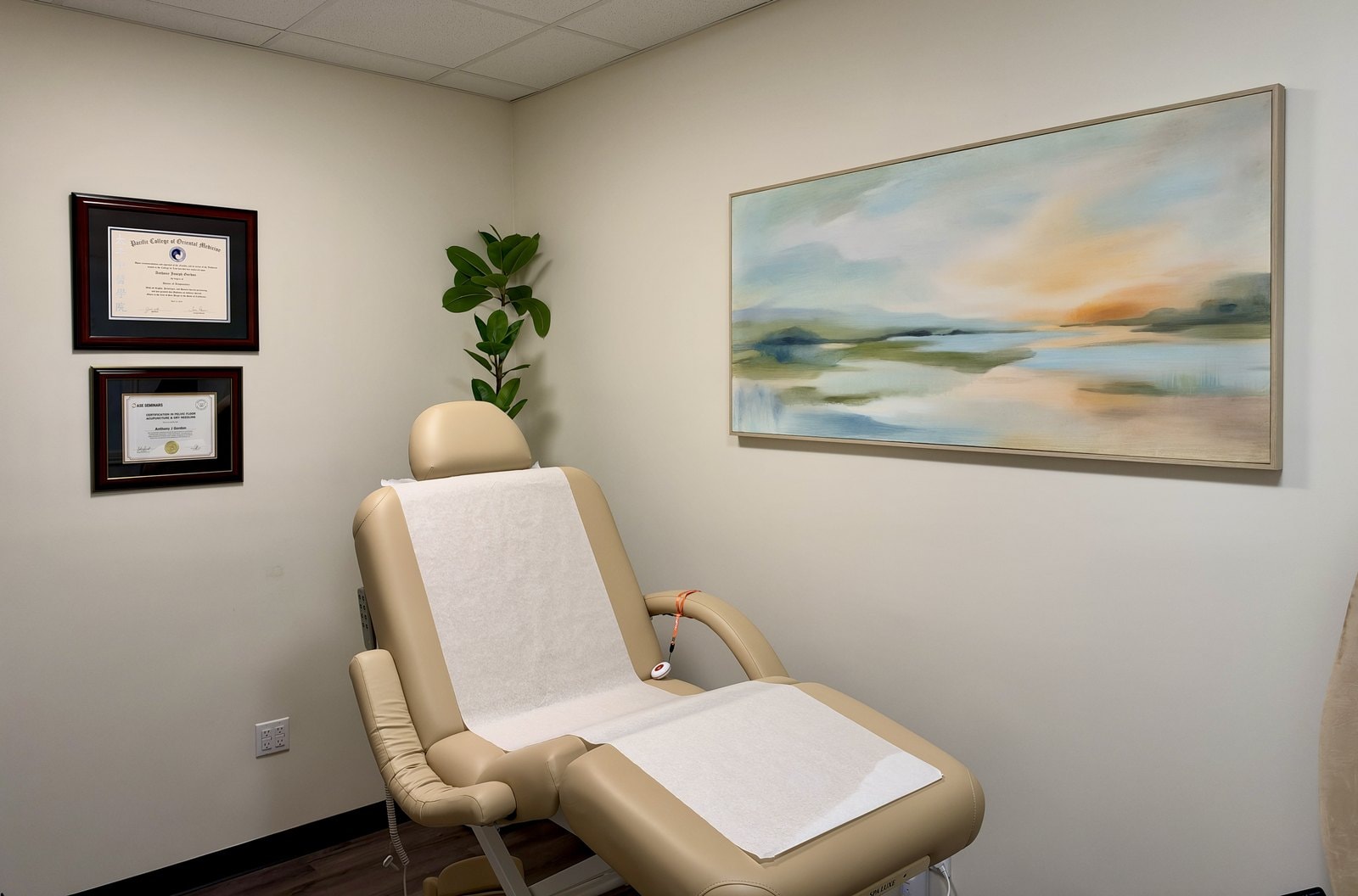
The exam is external. There is no internal exam. I use gentle pressure around the perineum, sit bones, tailbone and inner thighs, and check the hip and abdominal muscles that work with the pelvic floor. I explain each step before it happens.
- Tone. Whether the muscles are held too tight. Many people with bladder symptoms have an overactive pelvic floor, not a weak one.
- Trigger points. Tender spots that bring on your familiar urge or burning when pressed.
- Coordination. Whether the muscles let go when they should, such as when you start to urinate.
I also look at a short bladder diary of what you drink and when you go, because habits like just-in-case trips can train the bladder to signal earlier.
How it is treated
When the muscles are a main driver, treatment often includes pelvic floor dry needling. Intrapelvic needling reaches the deep muscles through the skin of the buttock, perineum or inner thigh, never through the vagina or rectum. Alongside dry needling, I use neuro-functional acupuncture, built on neuroscience and evidence-based practice. Unlike regular electroacupuncture, the needles and gentle electrical stimulation are mapped to the specific nerves involved, such as the sacral nerves. It works in three ways. It neurorehabilitates, helping irritated tissues and nerve receptors recover. It neuromodulates, shifting the body's own pain-relieving chemistry. It neuroregulates, rebalancing the nerve signals and circuits that help control the bladder. Between visits, we work on fluid timing and bladder retraining, and I coordinate with your physician. Keep taking any bladder medication as prescribed unless your physician changes it.
See a physician first if you have a fever, blood in your urine, sudden severe pain or you cannot urinate at all.
Barber JD, Biancaniello C. Pelvic Floor Myofascial Dysfunction and Lower Urinary Tract Symptoms: A Mechanism-Based Narrative Review and Proposed Neuro-Musculoskeletal Model. Medicina. 2026;62(10):1952. Read the review.
Questions people ask
Can the pelvic floor make it feel like a UTI when there is no infection?
Yes. Tight pelvic floor muscles can cause burning and urgency that feel just like an infection, which is why repeat negative cultures are a clue to check the muscles.
Does this happen to men too?
Yes. In men, these symptoms are often blamed on the prostate. The prostate should be checked, but the pelvic floor can be part of the picture as well.
Should I stop my bladder medication?
No. Keep taking it as prescribed and talk to your physician about any change.
Is there an internal exam?
No. The pelvic floor exam and treatment are done from the outside.
References
- Barber JD, Biancaniello C. Pelvic Floor Myofascial Dysfunction and Lower Urinary Tract Symptoms: A Mechanism-Based Narrative Review and Proposed Neuro-Musculoskeletal Model. Medicina. 2026;62(10):1952.