Shoulder Pain That Will Not Go Away: Rotator Cuff, Trigger Points or Both?
Shoulder pain that hangs on for months is usually blamed on the rotator cuff tendon. Sometimes that is the whole story. Often, though, trigger points in the cuff muscles cause much of the deep ache and weakness, and many people have a tendon problem and trigger points at once. Knowing which one leads shapes the plan.
Learn moreHow Dr. Gordon treats shoulder painSame shoulder, two different problems
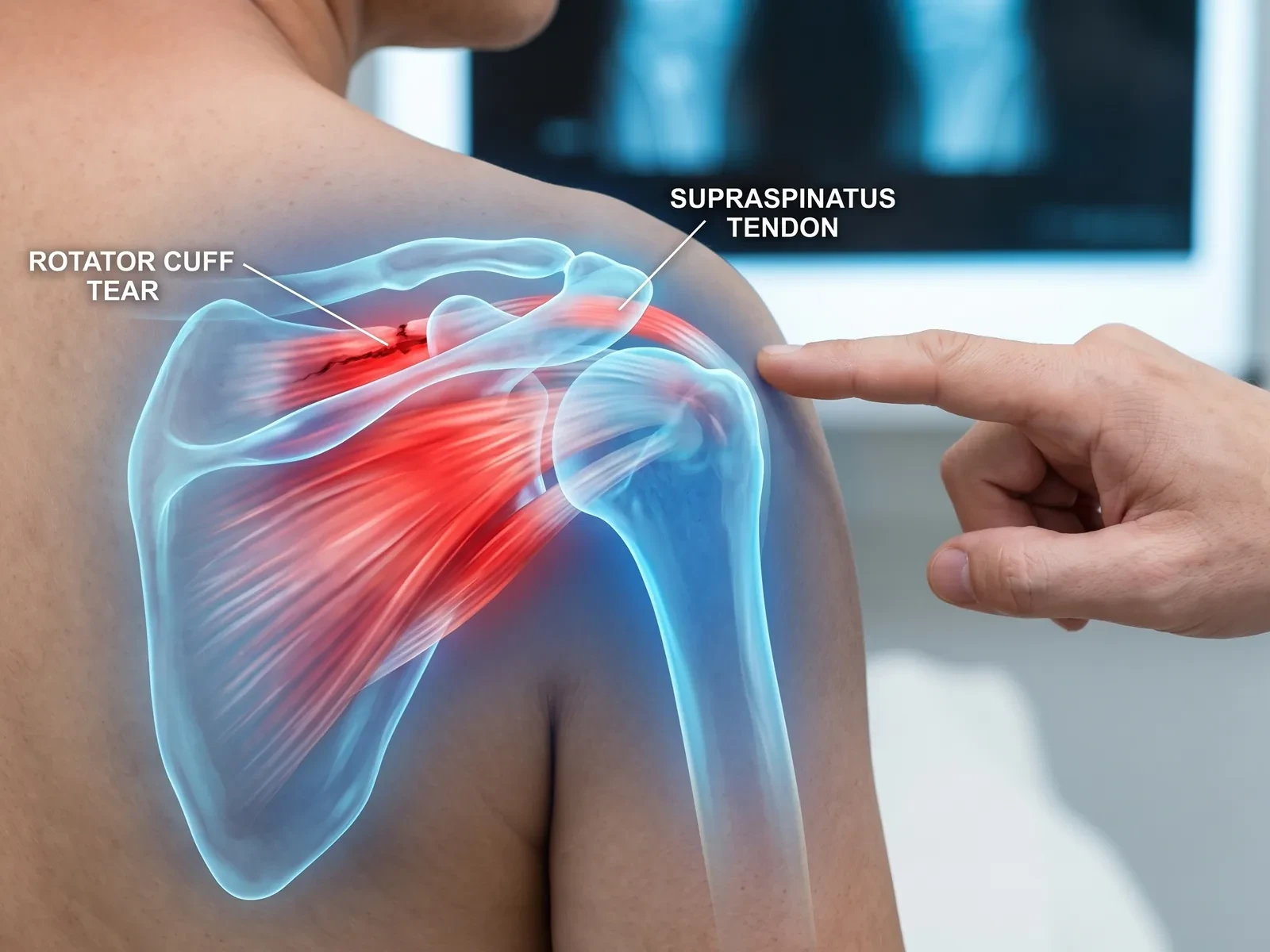
The rotator cuff is four muscles: the supraspinatus, infraspinatus, teres minor and subscapularis. Their tendons wrap around the top of the arm bone and keep it centered in the socket as you move.
A tendon problem ranges from irritation from overload or impingement, called tendinopathy, to partial and full tears. It can follow a fall or a heavy lift, or build up over time with overhead work, sport and age.
A trigger point lives in the muscle itself. It is a tight, tender spot that sends pain somewhere else. Cuff trigger points refer pain deep into the shoulder and down the arm.
Both can hurt when you reach overhead, ache at night and make the arm feel weak. That overlap is why one is so often mistaken for the other.
Clues that point to the tendon
These are clues, not a diagnosis, and many people have more than one source.
- The pain started with a fall, a heavy lift or a sudden pull.
- It hurts with one specific movement, or as you lift or lower the arm.
- Imaging shows a tear or tendon changes that match your symptoms.
Clues that point to trigger points
- A deep ache that is hard to pin to one spot, sometimes spreading down the outer arm.
- Tender spots on the back of the shoulder blade or top of the shoulder that bring on your familiar pain.
- Aching at rest, not only when you move.
- Imaging that was normal or does not explain how much it hurts.
Why so many people have both
The two feed each other. When the cuff is injured, the muscles around it guard, trigger points develop in the cuff muscles, and the shoulder blade muscles often stop moving in rhythm. A shoulder blade that moves out of rhythm also adds load to the tendon.
In one study of 72 people with long-standing shoulder pain that did not start with an injury, every one had trigger points. Active trigger points were most common in the infraspinatus, in 77 percent, and the upper trapezius, in 58 percent.
A tear on an MRI does not always explain the pain, either. The American Academy of Orthopaedic Surgeons notes that some rotator cuff tears are not painful, and that tendon wear naturally occurs as we age, in most cases with little pain.
Neck problems can also send pain to the shoulder, which the neck pain page covers.
How the exam sorts it out
The first visit runs 60 to 75 minutes. I review your imaging and any orthopedic or physical therapy notes, test the rotator cuff, impingement and the joint, examine the cuff and shoulder blade muscles by hand, and check whether your neck is contributing.
When pressing on a muscle brings on your familiar pain, that points to trigger points. When a specific cuff test brings it on, the tendon is involved. Often both are true. Your orthopedist evaluates the tendon and decides on surgery, and I am glad to work alongside your orthopedist and physical therapist.
See a doctor first if you have sudden weakness in the arm or hand, or sudden inability to lift the arm after an injury; numbness or tingling that is spreading or getting worse; a hot, red, swollen shoulder or fever; visible deformity or a shoulder that looks out of place; severe pain after a fall; loss of grip with frequently dropping objects; or arm or shoulder pain with chest pain, shortness of breath or sweating. If you have any of these, contact your doctor or go to the nearest emergency department.
How each one is treated
Dry needling releases trigger points in the four cuff muscles and the shoulder blade muscles. It does not heal a torn tendon, but it treats the trigger points and guarding behind much of the pain and weakness. Alongside dry needling, I use neuro-functional acupuncture, built on neuroscience and evidence-based practice. Unlike regular electroacupuncture, the needles and gentle electrical stimulation are mapped to the specific nerves involved, such as the nerves of the shoulder. It works in three ways. It neurorehabilitates, helping irritated tissues and nerve receptors recover. It neuromodulates, shifting the body's own pain-relieving chemistry. It neuroregulates, calming the nerve signals and circuits that keep shoulder pain going. Shockwave therapy is another option for an irritated tendon. The rotator cuff injuries page covers the full plan.
Most patients are seen weekly or every other week during active care. Results vary from person to person.
If you are not sure what is causing your pain, try the My Symptoms tool.
Questions people ask
My MRI shows a tear. Is that what is causing my pain?
Not always. Some rotator cuff tears are not painful. The exam checks whether the tendon or the muscles bring on your pain, so the plan fits what is hurting.
Can trigger points make my shoulder feel weak?
Yes. Trigger points in the cuff muscles can cause deep pain and weakness, which is one reason the exam tests each cuff muscle on its own. Sudden weakness, or an arm you cannot lift after an injury, needs a physician first.
Why does the ache spread down my upper arm?
Cuff trigger points can refer pain deep into the shoulder and down the arm, so the spread does not always mean a pinched nerve. Numbness or tingling that is spreading, or pain that starts in your neck, calls for a closer look at the neck.
References
- Bron C, et al. High prevalence of shoulder girdle muscles with myofascial trigger points in patients with shoulder pain. BMC Musculoskelet Disord. 2011;12:139.
- American Academy of Orthopaedic Surgeons. Rotator cuff tears. OrthoInfo. https://www.orthoinfo.org/diseases--conditions/rotator-cuff-tears